

Are Dog Seat Belts Really Crash Tested? What Those Labels Actually Mean
“Crash tested” sounds reassuring. But when you search are dog seat belts crash tested, you’ll quickly notice that many listings use the phrase without explaining how, by whom, or under what conditions. And unlike human seat belts, dog restraints don’t live under one single universal standard that every product must meet.
The goal of this guide is simple: help you understand what the label can mean, what it definitely does not mean, and how to make safer choices without relying on slogans. If you want the big-picture baseline first, start with how to travel in a car safely with your dog.
What “Crash Tested” Means In Human Vs Dog Safety
In human automotive safety, terms like “seat belt” and “crash testing” sit inside regulated systems and standardized test methods. In dog travel products, the phrase crash tested dog seat belt meaning can vary because:
- Different brands may test different components.
- Different tests may use different speeds, weights, or setups.
- Some claims refer to a harness, not the tether itself.
Key takeaway: Testing ≠ certification ≠ approval. A product can be “tested” in some way and still leave you with unanswered questions about how that test relates to real driving.
The Different Ways Dog Seat Belts May Be “Tested”
When you see “crash tested” on dog travel gear, it usually points to one of a few categories. Understanding the categories makes the label easier to interpret.
| What “Crash Tested” Can Mean |
|
None of these categories are “bad.” The point is that a single label doesn’t tell you which one was done, what conditions were used, or whether the full system (dog + harness + tether + anchor point) was included.
Why There Is No Single Universal Crash Test Standard For Dogs
This is where most confusion starts. Dog restraint testing is harder to standardize because real-world variables are huge:
- Dog variability: size, chest shape, posture, and how dogs sit or lie down during travel.
- Vehicle variability: seat geometry, belt locations, anchor points, and seat materials.
- Ethical and practical constraints: safe, repeatable methods must avoid harmful real-world experimentation.
It also helps to remember that laws and enforcement vary by location, which reinforces the idea that regulation is not uniform. That context is part of why dog car travel laws by state looks different depending on where you drive.
Common Misunderstandings About Crash-Tested Labels
| Myth Vs Reality |
|
What Actually Matters More Than The Label
If your goal is safer travel, the fundamentals beat marketing language. Regardless of how a product is labeled, your dog car restraint testing explained takeaway should be this: the real-world result depends on fit, positioning, and stability.
- Harness fit: a loose harness can increase stopping distance and allow twisting.
- Tether length: too much slack increases forward travel; too little can prevent comfortable sit/lie positions.
- Anchor placement: the seat belt path and clip location affect how the load travels.
- Stable seating surface: slipping and sag can create extra movement before the restraint ever engages.
- Predictable positioning: centered, balanced dogs tend to brace less and shift less.
This is also why seatbelt access is not a “nice feature.” It’s what keeps restraint use practical and consistent when your dog is riding in the backseat.
Why Seat Belts Work Best As Part Of A System
Seat belt tethers are designed to limit forward motion. They work best when the dog is already on a predictable surface, sitting or lying in a stable position. If a dog is sliding, scrambling, or sinking into a sagging surface, more movement happens before the tether becomes effective.
That is one reason hard-bottom stability matters in real driving. A stable base reduces slipping and keeps positioning more consistent so the harness and tether can do their job with fewer variables.
If you’re choosing gear, start with the tether itself and then build the rest of the setup around it. An adjustable dog seat belt tether makes it easier to dial in the right amount of controlled movement for your dog’s size and riding position.
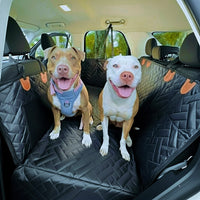
And if your current surface shifts or collapses, a hard-bottom dog seat cover for stable restraint setups helps reduce sliding and sag so the system stays calmer and more repeatable.
How To Read Safety Claims As A Dog Owner
When you see dog seat belt safety claims, use questions that force clarity. You’re not looking for perfection. You’re looking for transparency.
| Safety-Claim Reading Checklist |
|
Final Thoughts: Labels Don’t Create Safety - Setups Do
“Crash tested” is a starting point, not a guarantee. The most useful way to interpret the label is to treat it as an invitation to ask better questions: what was tested, how it was tested, and what the limitations are.
If you want a safer, calmer routine, focus on the pieces that you can control every day: a well-fit harness, controlled slack, reliable buckle access, and a stable surface that reduces sliding before the tether engages. When your setup is predictable and repeatable, your dog’s travel behavior usually improves too.
Share