

Why Long-Back Dogs Are Prone to IVDD: Steps Owners Can Take
Your long-backed dog is moving differently and you keep hearing “IVDD,” so you need to decide what matters most right now: rehab planning, urgent veterinary care, surgery discussion, or mobility support. The practical framework is to match what you see at home, pain only, walking but weaker, or not walking, to the right urgency and next step. Below are four common patterns, why long-backed breeds are higher risk, and how to set up traction and mobility gear without fit mistakes.
The Four Patterns That Point To Rehab, Urgent Care, Surgery Discussion, Or Mobility Planning
IVDD can look like pain, neurologic weakness, or both, and the fastest way to make a good decision is to focus on whether your dog can still walk and support weight. For a veterinary overview of typical signs and treatment paths, see Intervertebral Disk Disease (IVDD) in small animals.
- Mild gait change lasting past a day or recurring, with no pain signs: book a vet exam and reduce jumping.
- Yelping, trembling, hunched back, or refusing stairs or jumps: limit movement and get same-day veterinary guidance.
- Knuckling, paw crossing, dragging, or repeated falls while still walking: seek urgent vet or neurology assessment.
- Cannot stand or walk, loses bladder control, or worsens over hours: treat as an emergency and go now.
Where “surgery” enters the conversation is usually tied to neurologic severity and speed of change, not whether your dog looks “tough” or still wants to go outside. If your dog is getting worse quickly, is non-ambulatory, or has major neurologic deficits, specialists often emphasize timely assessment and discussion of options in intervertebral disc disease. If your dog is stable but rear-limited after veterinary guidance, mobility planning can keep outings controlled, and some owners consider dog wheelchairs as part of that plan.
- Rear legs suddenly collapse or your dog cannot take steps without you holding the body up.
- New front-leg weakness, wobbly neck movement, or yelping when the head turns.
- Pain plus fast neurologic change, like knuckling that appeared today or is clearly worse than yesterday.
- Loss of urine or stool control that is new for your dog.
- Any episode where your dog screams, becomes rigid, or refuses to move after a jump or twist.
Why Long Backs And Short Legs Raise The Stakes
IVDD happens when a disc bulges or herniates and irritates the spinal cord or nearby nerves, which is why signs can range from pain to coordination loss. A clear, owner-friendly summary of common signs is in intervertebral disc disease (IVDD) in dogs. The decision takeaway is that small changes in a predisposed dog deserve faster attention than “wait and see.”
Long-bodied, short-legged dogs are overrepresented in IVDD discussions partly because their body shape is associated with earlier disc degeneration, and everyday slips and awkward landings can matter more. In real homes, flare-ups often follow a jump off furniture, a slide on hardwood, or a twist to turn quickly, even when the dog did “nothing crazy.” You cannot prevent every moment, but you can remove the repeatable risks: slick flooring, steep stairs, and uncontrolled launches.
If your dog is a known risk breed, assume you will need traction and controlled access eventually and make those changes early. It is much easier to prevent a wipeout than to rehab a dog who is afraid to stand because the floor feels unsafe.
What Owners Commonly Misread In Dachshunds, Corgis, And French Bulldogs
Dachshunds: The earliest sign owners describe is often a posture change, tight back, tucked pelvis, or refusing a usual jump rather than obvious wobbling. The common mistake is continuing couch and bed access because the dog still looks eager, which keeps repeating the same risky movement. If your dachshund starts “asking to be picked up” or hesitates at thresholds, treat that as a real data point and get guidance.
Corgis: Athletic corgis can mask early weakness until they are tired, on slick floors, or turning tightly. Owners often notice rear sway on hardwood, missed paw placement on turns, or a new habit of sitting down sooner on walks. The common mistake is high-speed fetch with sharp pivots when rear control is already inconsistent, which can convert a mild issue into a bad day fast.
French bulldogs: Compact dogs can still have meaningful spine risk, and early deficits may look like subtle rear asymmetry or scuffing rather than a dramatic “wobble.” Owners often miss it because the dog keeps trying hard, so the warning sign becomes repeated stumbling in the same situations, like door thresholds or quick turns. If you notice new scuffing or drifting, reduce jumping immediately and schedule an exam instead of testing whether it “walks off.”
Home Setup And Wheelchair Planning Without Fit Failures
Start with traction and predictable routes, because slipping changes the whole picture. Put runners or nonslip mats in launch and landing zones, especially near food and water, beds, and doorway turns, and block steep stairs if your dog hesitates or misses steps. If your dog is painful or newly worse, do not add DIY stretching or “traction” techniques at home unless your vet or a rehab professional instructs you to.
Ramps are usually safer than stairs for furniture and car entry in IVDD-prone dogs because they reduce abrupt flexion and failed launches. Keep the ramp approach straight and slow, and do not let kids or other pets trigger sudden speed changes at the top or bottom. If your dog is stable but rear-limited after veterinary guidance, a mobility device can help you control pace and footing, but only if it fits and tracks straight.
| If You Notice This | Try This Next |
|---|---|
| Redness, dampness, hair loss, or pinching at straps | Stop; adjust contact points and tension, then recheck after the next short session |
| Leaning, arched back, or twisted posture in the frame | Revisit height and alignment so support stays level and centered |
| Cart pulls to one side or dog fights straight travel | Check strap symmetry and axle placement; small tweaks often fix tracking |
| Tipping on turns or at thresholds | Slow down, widen turns, and reassess balance and axle position |
| Unsafe toe or knuckle drag during cart use | Pause and ask your vet whether protection or a different support plan is needed |
Prioritize fit and comfort: level alignment, no rubbing or pinching, and a stable roll you can control. Supervise use and keep early sessions short during the first week. Stop and reassess for rubbing, distress, tipping, refusal to move, sudden mobility change, or escalating pain. Home layout, indoor traction, outdoor terrain, and caregiver lifting and steering ability all matter.
Final Thoughts
For long-backed breeds, the decision is mostly about pattern and speed: pain or rapid change needs prompt veterinary assessment, and loss of walking or bladder control is an emergency. Mild, persistent gait changes still deserve an exam, because early guidance can prevent avoidable setbacks. If your vet clears wheelchair use for stable rear weakness, a Whisker Bark dog wheelchair should help you keep movement centered, controlled, and predictable.
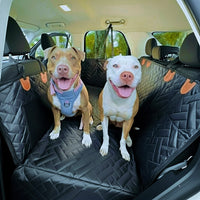
For car rides and post-appointment outings, the Whisker Bark dog seat cover is waterproof to protect seats from wet paws and wheels.
Share