
Product Setup & Video Instructions


Need help with your setup? Contact Us
Blog posts

Are Dogs Allowed in Whole Foods?
by Whisker Bark
on Aug 27 2026
Only service animals are allowed inside Whole Foods. Pets are not, however many you have seen in the aisles of your local store.
The gap between the rule and what people actually do is wider at Whole Foods than almost anywhere else, and it is worth understanding why before you assume the store you are going to will be relaxed about it.
Does Whole Foods Allow Dogs?
Service animals only. We went looking for an official published Whole Foods pet policy and could not find one, which puts it in the same position as most large retailers and unlike Walmart, which does publish one.
The absence of a published policy does not create permission here, though, because a grocer does not need a company rule to say no. The law already does.
The Rule That Decides It
Whether a shop lets your dog in is mostly predicted by whether it sells food.
Every state adopts some version of the FDA Food Code. Its rule on animals, section 6-501.115, states that live animals may not be allowed on the premises of a food establishment, with an exception for service animals under the control of a person with a disability in areas usually open to customers.
Whole Foods is a grocer with open produce, a butcher counter, a fishmonger, hot food bars and prepared meals. It is a food establishment several times over, and there is no version of the rule that lets a pet onto that floor.
Then Why Do I See Dogs in Whole Foods?
Because enforcement is a person's decision and the rule is not.
Whole Foods stores skew urban, sit in neighbourhoods with high dog ownership and a lot of foot traffic, and are staffed by people who mostly do not want a confrontation at the entrance over a small dog in a bag. So the rule goes unenforced far more often than it is applied.
That is not the same as being allowed. A member of staff asking you to leave with a pet is applying the rule correctly, and there is nothing to appeal to.
The Patio Exception
This is the part worth knowing, because it is real and it is written into the same regulation that bans dogs indoors.
Many jurisdictions have adopted provisions permitting dogs in the outdoor areas of a food business, subject to a permit and conditions. Where your local authority has adopted that, a Whole Foods with outdoor seating can legitimately allow a dog at an outside table while still refusing one inside.
It varies by state and by city, which is why the answer changes when you travel. If a store has a patio and a dog bowl by the door, that is usually why.
What Counts as a Service Animal
The Americans with Disabilities Act defines a service animal as a dog individually trained to do work or perform tasks for a person with a disability, directly related to that disability.
Emotional support animals do not qualify, because comfort is not a trained task. Dogs in training are not covered federally, though some states grant access rights separately.
A vest, a doctor's letter and an online certificate carry no weight in a shop. There is no federal service dog registry, and the sites selling certificates are selling paper.
Can Whole Foods Ask for Proof of a Service Dog?
No.
Where it is not obvious what service the dog provides, staff may ask exactly two questions:
Is the dog a service animal required because of a disability?
What work or task has the dog been trained to perform?
That is the whole list. Staff may not request documentation, require the dog to demonstrate its task, or ask about the nature of the person's disability.
The mismatch between how easy that is to say and how strict the food rule is, is exactly why staff at a grocer often look uncertain. They are allowed to ask very little and required to enforce quite a lot.
How Whole Foods Compares
The food test sorts the whole category once you know it.
Whole Foods sits with the supermarkets and the warehouse clubs at service animals only. Our guide to whether dogs are allowed in Costco covers the strictest version of it, where open samples and a food court raise the stakes further.
Hardware chains and garden centres sell no food, fall outside the regulation entirely, and are relaxed as a result. That is the line, and almost every contradictory article on this subject is describing one side of it without mentioning the other.
Carriers, Bags and Strollers
A dog in a bag is still a live animal on the premises. The regulation is about the animal being there rather than about whether its feet touch the floor, and a covered carrier changes nothing legally.
What it changes is whether anyone says anything, which is a different question and the reason the tactic is so common.
Where a dog stroller genuinely belongs is the rest of the trip: outdoor markets, garden centres, pet shops, hardware stores and the walk in between.
Those are the places with nothing on the shelves that a health inspector cares about.
Our guide to which shops allow dog strollers covers where that holds.
For an Older Dog That Comes Along Anyway
Plenty of these trips are not really about the shop. They are about a dog that used to come everywhere and is now managing less of it.
A patio table, an outdoor market and a slow lap of a shopping street are the parts still available once a supermarket floor is not, and a dog that tires quickly can still do all of them sitting down.
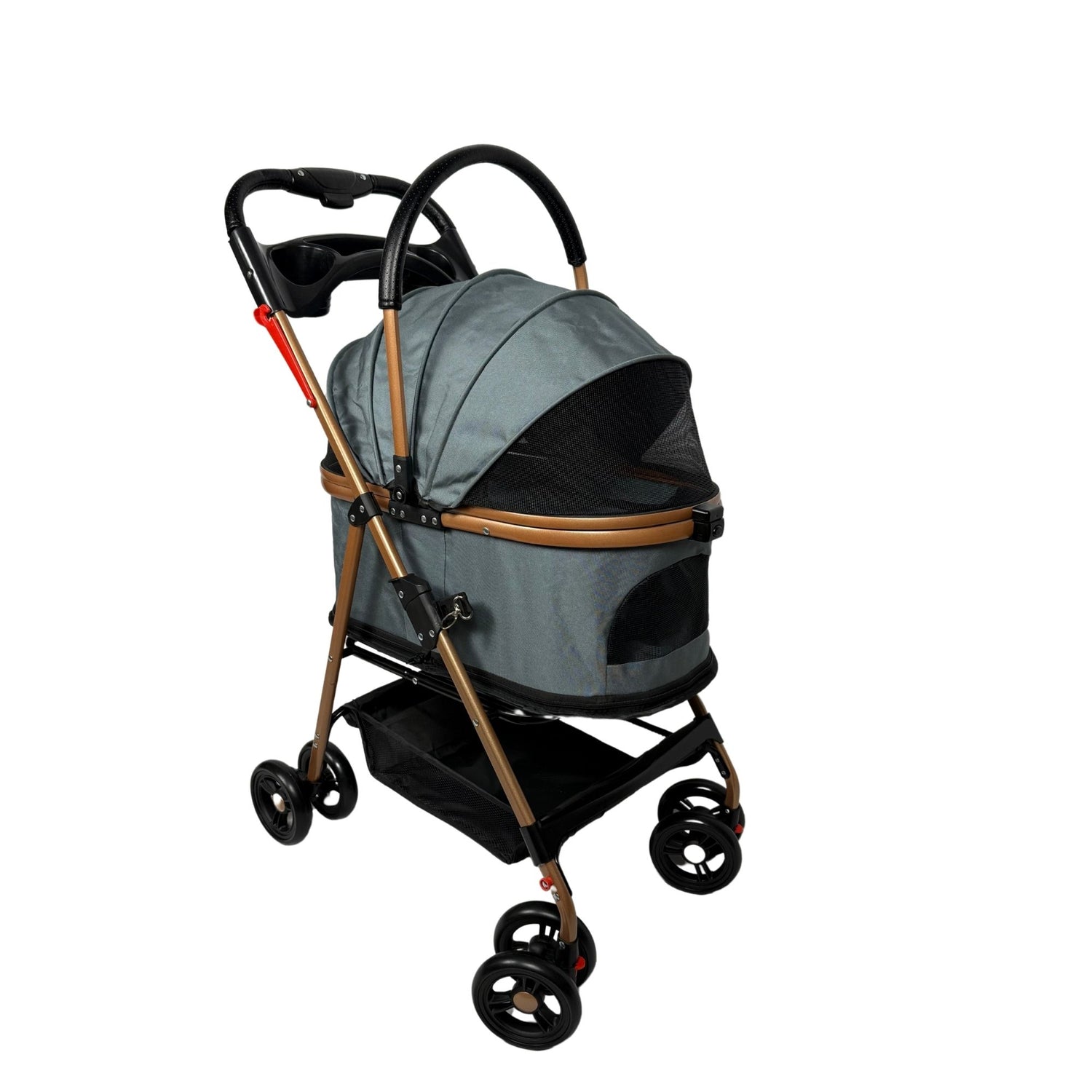
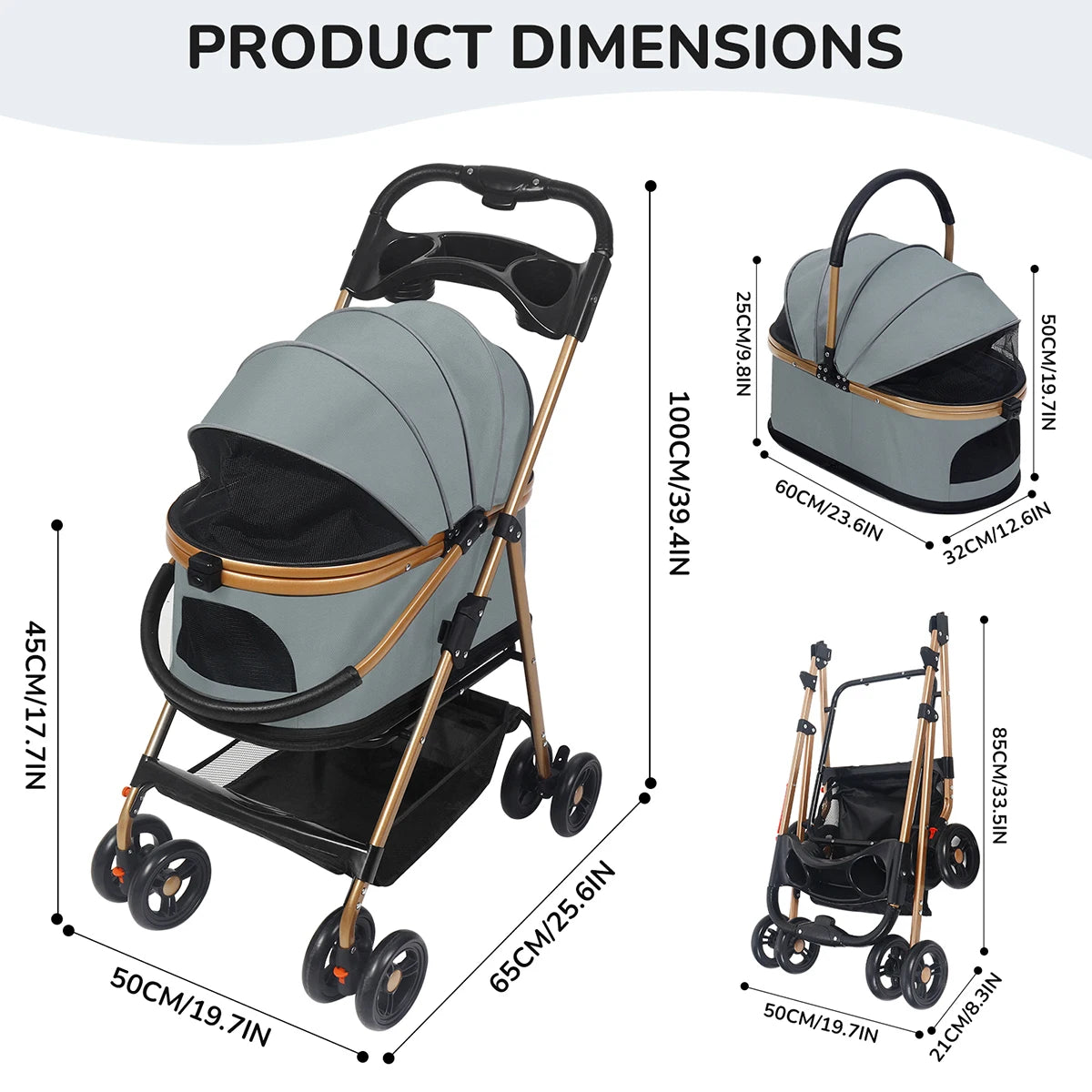
The Whisker Bark luxury pet stroller folds flat for a boot and zips over in weather, which is what keeps a slower dog in the day out rather than left at home.
When a Service Dog Can Be Asked to Leave
Two situations, and they apply to genuine service animals as much as to anyone else.
A dog that is out of control while the handler takes no effective action to control it, and a dog that is not housebroken.
In either case the business can ask for the animal to be removed and must still offer to serve the person without the dog present.

by Whisker Bark
on Aug 27 2026
Only service animals are allowed inside a Costco warehouse. Pets are not, and Costco is one of the few large retailers that says so publicly rather than leaving it to individual managers.
It is also one of the strictest chains in practice, and the reasons are specific rather than arbitrary.
Does Costco Allow Dogs?
No, unless the dog is a trained service animal. Costco's own customer service material addresses the question directly and states that members accompanied by service animals have immediate access to its warehouses.
The wording is worth noticing. Immediate access for service animals, with nothing offered for pets.
Why Costco Is Stricter Than a Hardware Store
Whether a shop lets your dog in is mostly predicted by whether it sells food.
Every state adopts some version of the FDA Food Code. Its rule on animals, section 6-501.115, prohibits live animals on the premises of a food establishment, with an exception for service animals under the control of a person with a disability in areas usually open to customers.
Costco is not merely a shop that sells food. It sells it in bulk, prepares it in store, hands out open samples on the shop floor, and runs a food court. Every one of those raises the regulatory stakes, which is why the line is held harder here than at a supermarket, and far harder than at a hardware store selling no food at all.
Is Costco Dog Friendly Anywhere?
Outdoors, and that is the whole extent of it.
The car park and outdoor areas are not a food establishment, so a pet waiting outside with someone is not a rules problem. The warehouse floor, the food court, the pharmacy counter and the petrol station forecourt are all inside the line.
Leaving a dog in a parked car while you shop is a separate and much worse idea, and in many states it is an offence.
What Counts as a Service Animal
The Americans with Disabilities Act defines a service animal as a dog individually trained to do work or perform tasks for a person with a disability, where that task relates directly to the disability.
Emotional support animals are not covered, because comfort is not a trained task. Dogs still in training are not covered federally either, though some states extend access rights of their own.
Costco is a membership business, which adds a wrinkle: bringing a pet in under a false claim is the sort of thing that can be treated as a membership issue rather than just an awkward conversation at the door.
Can Costco Ask for Proof of a Service Dog?
No, and this is the point most often got wrong by both sides.
Where it is not obvious what service the dog provides, staff may ask exactly two questions:
Is the dog a service animal required because of a disability?
What work or task has the dog been trained to perform?
That is the whole list. Staff may not request documentation, require the dog to demonstrate its task, or ask about the nature of the person's disability.
Being a members only warehouse does not create an exception. The ADA applies to Costco the same way it applies to any business open to the public.
What About the Food Court and the Petrol Station
The food court is inside the restriction, and it is the part of the warehouse where the food code bears down hardest, because food is prepared and served there rather than sold sealed.
Petrol stations attached to a warehouse are outdoors, so a dog in the car with a window down while you fill up is not the same question. On a warm day it is still a bad idea for reasons that have nothing to do with Costco.
If You Cannot Leave the Dog at Home
The practical answer is a second person, and it is worth saying because the alternatives are worse.
One adult stays outside with the dog while the other shops. On a hot or cold day, that is the only version that is safe, because a car park is not shade and a warehouse run is not five minutes.
Leaving a dog in the car is the option people reach for and it is the one that kills dogs every summer. Twenty states make it an offence outright.
Samples Are the Reason It Feels Strict
Costco's sample carts are open food at dog nose height, moving around the shop floor.
That is a contamination route a sealed grocery aisle does not have, and it is the clearest single answer to why a company that will sell you a kayak and a coffin will not let your terrier through the door.
Where to Take the Dog Instead
The shops with no food on the shelves are the ones that stay relaxed: hardware stores, garden centres, pet shops and outdoor markets.
A dog stroller extends that considerably, particularly for a small dog or an older one.
The test is the same one running in reverse: no food on the shelves, no regulation, no reason to say no.
Our guide to which shops allow dog strollers goes through where it works.
For a dog that used to manage a full outing and no longer does, the shop is rarely the real problem. The distance is.
The Whisker Bark luxury pet stroller folds flat for a boot and zips closed in weather, which is what makes a long day out workable for a dog that cannot do the whole thing on foot.
When a Service Dog Can Be Asked to Leave
Two situations, and they apply to genuine service animals as much as to anyone else.
A dog that is out of control while the handler takes no effective action to control it, and a dog that is not housebroken.
In either case the business can ask for the animal to be removed and must still offer to serve the person without the dog present.
How Costco Compares
Costco sits at the strict end, and the ordering is fairly predictable once you know the food test.
Costco and the supermarkets hold at service animals only. Walmart and Target do the same. Hardware chains and garden centres sell no food and are relaxed about it. The contradictions you read online are mostly people describing different points on that line.

by Whisker Bark
on Aug 27 2026
Lowe's allows leashed, well behaved dogs in most stores. It is one of the most reliably dog friendly large chains in the country, and it is also one that has never published a policy saying so.
That combination is why you will find articles confidently stating both answers. Here is what is actually true and what governs it.
Does Lowe's Allow Dogs?
In practice, yes, in the large majority of stores. We looked for an official published Lowe's pet policy and did not find one. What exists is a long standing and widely reported practice of stores welcoming leashed dogs.
Practice is not policy. It means the answer at your store is decided by the people working there, and it is very likely yes.
Why the Answer Differs From Shop to Shop
Whether a shop lets your dog in is mostly predicted by whether it sells food.
Every state adopts some version of the FDA Food Code, whose rule on animals, section 6-501.115, prohibits live animals on the premises of a food establishment, with an exception for service animals under the control of a person with a disability in customer areas.
Lowe's sells timber, tools and plants. No food, no regulation, no reason for a manager to say no unless your dog gives them one.
A supermarket has no such freedom, whatever its staff think of dogs.
How to Check Before You Go
Ring the branch. With no published policy, the store itself is the only source that can actually answer for the floor you are walking onto.
It is a thirty second call and it saves the version where you arrive with a dog in the car and no plan. Ask about that location rather than the chain, because that is all the person answering can speak to.
Is Lowe's Dog Friendly?
Yes, with the same caveat that applies to any warehouse.
The store is a working environment. Forklifts and order pickers run the aisles, timber gets cut, and the floor collects dropped fixings and spilled chemicals. Permitted and safe are different questions, and the second one is on you.
The garden centre is the part most people bring a dog to, and it is worth knowing that it is also where fertiliser, slug pellets and pesticides sit at nose height.
What to Do If You Are Turned Away
It happens, and it is not usually personal.
Individual stores tighten up after an incident, a complaint or a change of manager. Because there is no national policy, there is nothing to escalate to and no rule being broken.
Asking politely whether it is a store decision is worth doing once, because staff sometimes apply a rule that does not exist. Beyond that, the answer is the answer.
A trained service dog is an entirely different situation, and being refused is a legal matter rather than a discretionary one.
What Counts as a Service Animal
The Americans with Disabilities Act defines it as a dog individually trained to do work or perform tasks for a person with a disability, directly related to that disability.
Emotional support animals do not qualify, because comfort is not a trained task. Neither do dogs still in training, at least not federally, though some states grant access rights of their own.
None of that matters much at a store that admits pets anyway. It matters enormously at the ones that do not.
Can Lowe's Ask for Proof of a Service Dog?
No.
Where it is not obvious what service the dog provides, staff may ask exactly two questions:
Is the dog a service animal required because of a disability?
What work or task has the dog been trained to perform?
That is the whole list. Staff may not request documentation, require the dog to demonstrate its task, or ask about the nature of the person's disability.
Bringing a Puppy or a Reactive Dog
A hardware store is a genuinely useful training environment: busy, loud, full of strangers and trolleys, and free of food on the shelves.
For a young dog, short visits at a quiet hour build more than a long one at the weekend. For a reactive dog, the wide aisles give you room to create distance, which is the thing most shops do not offer.
Leave before it stops going well rather than after.
How Lowe's Compares With Other Chains
The pattern across the whole category is the food test, and it sorts the chains cleanly.
Lowe's, Home Depot and most garden centres sell no food and are relaxed. Supermarkets and warehouse clubs sell it, sample it and prepare it, and hold at service animals only. Our guide to whether dogs are allowed in Target works through the strict end of that.
The contradictory articles you find on this subject are mostly people describing different points on that line without naming it.
Dogs in Trolleys and Strollers
Nobody is enforcing anything here, so the only question is what is sensible.
A flatbed lumber trolley has no sides and is built to be pushed at pace. It is not a place to put a dog.
A dog stroller is the arrangement that works, and hardware stores, garden centres and outdoor markets are exactly where it belongs.
Those are the places with no food on the shelves, which is the same test running in reverse.
Our guide to which shops allow dog strollers sets out where it holds up and where it does not.
For a Dog That Tires Halfway Round
A full lap of a warehouse store is a long way for an older dog, and the polished concrete floors are the worst possible surface for a weak back end.
What usually happens is not that the dog struggles through. It is that the dog stops being brought at all.
The Whisker Bark luxury pet stroller folds flat for a boot and zips over in weather, which keeps a slower dog on the trip instead of at home.
When a Service Dog Can Be Asked to Leave
Two situations, and they apply to genuine service animals as much as to anyone else.
A dog that is out of control while the handler takes no effective action to control it, and a dog that is not housebroken.
In either case the business can ask for the animal to be removed and must still offer to serve the person without the dog present.
Related Products