

Best Dog Wheelchair for Large Dogs: Stability & Fit Checks
You need a dog wheelchair that can handle a large dog without feeling tippy, twisting in turns, or creating rub spots you cannot control. The “best” choice is made in two steps: pick the right support style first, then match frame geometry, wheel behavior, and harness contact points to your dog and your surfaces. If you are shopping now, start by looking at adjustable pet wheelchairs that can be tuned for stability and fit.
What Best Means For Large Dogs
For a big body, “best” means predictable handling when your dog shifts weight, turns slowly in a hallway, or steps over a threshold. Small fit errors that look minor on a small dog can feel dramatic on a large frame because more weight magnifies wobble, strap pressure, and sideways drift. Your top priorities are stable tracking, enough adjustment range to fine-tune posture, and contact points that support bone and muscle without digging into soft tissue.
Decide your non-negotiables before you fall in love with a cart: you need a width that clears your narrowest doorway, a setup you can put on without unsafe lifting, and a roll that you can control if your dog surges or leans. If the cart forces an awkward posture, such as the rear hanging too low or the body pitched forward, many dogs will resist because it feels physically wrong, not because they are “stubborn.”
If your dog’s mobility changed suddenly, or the change looks painful, get veterinary guidance before you commit to a setup, since some causes have specific restrictions or timelines. VCA’s overview of intervertebral disc disease (IVDD) in dogs is a good reminder that fast changes should not be guessed at. A wheelchair can still be part of the plan, but “best” is the cart that fits your dog’s current limits and keeps movement controlled.
Choose Rear Support Or Full Support
This decision prevents the most expensive mismatch. Rear support works when the front end can reliably steer, brake, and carry the effort of moving forward once the rear is lifted. Full support is usually the safer direction when overall balance is unreliable, when the front end also stumbles, or when your dog cannot stay upright through a slow turn.
Large dogs often “tell on the cart” quickly: if trunk control is poor, the cart may swing wide behind them, or they may collapse when they try to turn around furniture. If your dog can stand and move with purpose as soon as the rear is supported, rear support is often enough. If you are frequently catching falls, or the front end cannot keep the cart tracking straight, full support is more likely to be the right starting point.
- Choose rear support when front legs reliably stand, steer, and catch small slips.
- Choose full support when your dog collapses in turns or cannot stay upright.
- If the front also scuffs, knuckles, or crosses over, lean full support.
- If you cannot prevent falls without lifting, ask your vet before buying.
Large-Dog Buying Checks That Matter Most
Large-dog carts succeed or fail on geometry: your dog should sit centered in the frame, with wheels tracking straight and support points landing in places that tolerate pressure. A frame that feels narrow for your dog’s body or flexes under light side pressure can be harder to control because it can wander and “steer itself” when your dog shifts weight. Many owners do best with a cart that feels rigid and squared up behind the dog, not springy.
Wheel behavior matters in real life more than in product photos. Larger-diameter wheels often handle sidewalk cracks, grass, and door thresholds with fewer sudden stops, while very small wheels can catch and pitch a heavy dog forward. If you deal with cambered driveways, side-hills, or leash pulls to one side, prioritize a setup that stays balanced at a slow walking pace and does not feel like it wants to tip when your dog leans.
Plan for your home like it is an obstacle course. If the cart cannot clear your narrowest doorway, make the tightest hallway turn, and roll over your most common threshold, it will end up parked in a corner. Also think through transport: for many large dogs, the best cart on paper is not the best cart if you cannot safely lift, load, or store it.
- Confirm the cart clears your narrowest doorway and your tightest turn.
- Choose a frame that does not twist easily when you gently push the side rails.
- Match wheel size to your most common surfaces, not just your yard.
- Avoid harness layouts that pull into the groin or sit in the armpit.
- Measure exactly as requested, since small errors amplify wobble on big dogs.
Before purchasing, use the dog wheelchair sizing and fit guide to make sure you are gathering the right measurements and choosing the right support style.
Fit Checks And Fast Fixes At Home
Most “my dog refuses the cart” situations come down to fit, not attitude. Start by checking height, then wheel balance, then strap placement, because those three issues most often create the “this feels unsafe” reaction in large dogs. Check fit early, since big dogs can develop irritation quickly, and discomfort can turn into long-term avoidance.
Look at posture from the side and behind on a flat, non-slip surface. If your dog looks like they are sitting down into the cart, the rear support is usually too low or positioned too far back. If your dog looks tip-toed with the rear barely making contact, the rear support is often too high. If your dog has to drag the cart forward with the shoulders, the wheels are often set too far back, and the cart can feel like it is pushing into them instead of carrying.
Safety for large dogs is mostly about fit and control: the cart should roll stable and aligned with no pinching or rubbing. Supervise use, keep the first week to short sessions, and add time or terrain only when movement stays relaxed. Stop and reassess for rubbing, distress, tipping, refusal to move, sudden mobility change, or pain escalation. Factor in home layout, indoor traction, outdoor terrain, and what you can physically handle.
Final Thoughts
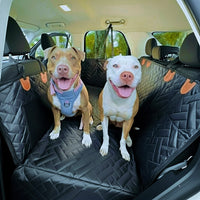
The best wheelchair for a large dog is the one that matches the right support style, clears your real living space, and stays stable when your dog shifts weight. Use rear vs full support to avoid the biggest mismatch, then dial in height, wheel balance, and strap placement to prevent the “pushed” feeling and rub spots. If you are ready to buy, a Whisker Bark dog wheelchair gives you an adjustable starting point you can fine-tune at home. For trips in between walks, the Whisker Bark dog seat cover adds a waterproof barrier that wipes clean.
Share