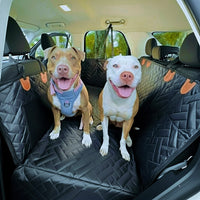

The Whisker Bark Safety Standard For Sudden Stops And Crashes
Normal driving is predictable. Sudden stops are not. Most people think about “crash safety” as a high-speed event, but everyday risk often shows up in hard braking, evasive maneuvers, and unexpected stops in city traffic. In those moments, your dog experiences the same forces as any unsecured load: forward momentum, sliding, and bracing against whatever surface is closest.
If you want the fundamentals of how to travel in a car safely with your dog, start there. This article goes one level deeper: how we think about stability and design decisions that reduce chaos before impact, especially for big dogs, senior dogs, and multi-dog households.
- Sudden stops matter more than most owners realize. They happen often, even without an accident.
- Stability comes first. The less your dog slides and scrambles, the more predictable everything becomes.
- Seat covers do not replace restraints. A stable surface helps a harness system work more consistently.
What Actually Happens To A Dog During A Sudden Stop
During a sudden stop, your vehicle slows down quickly. Your dog’s body wants to keep moving at the previous speed. That gap between the car slowing down and the dog slowing down is where problems start.
- Forward Momentum: Dogs shift forward, even if they were calm a moment earlier.
- Lateral Sliding: In a quick turn or lane change, dogs can drift sideways, especially on smooth seats.
- Bracing Against Doors And Consoles: Dogs try to “catch” themselves with paws and shoulders, which creates awkward angles and concentrated force on interior surfaces.
- Soft Surface Collapse Under Load: If the riding surface sags, the dog sinks and loses footing, then scrambles to recover balance.
- Balance Loss Before Impact: A dog can lose stability during braking even when there is no collision at all.
| Sudden Stop Risk Zones Checklist |
|
Why Traditional Soft Hammock Covers Struggle Under Force
Hammock-style covers are popular because they are light, quick to install, and they block access to the footwell. For many small and medium dogs on occasional trips, they can be a reasonable choice.
Where many soft hammock designs struggle is when forces increase, like heavier dogs, two dogs moving independently, or frequent braking and turns.
- Sag Increases Forward Motion: When the middle dips, a dog naturally slides toward the lowest point during braking.
- Fabric Stretch Delays Deceleration: A surface that stretches can allow extra travel before the dog stabilizes.
- Hardware Flex: Some designs rely on components that can flex under repeated tension.
- Footwell Collapse: As the hammock droops, the “blocked footwell” benefit can turn into a balance hazard.
For a deeper, feature-by-feature explanation, see the hard bottom vs soft bottom dog seat cover comparison.
The Whisker Bark Safety Standard
Our safety approach is built around one idea: reduce what happens before impact. That means less sliding, less scrambling, and more predictable positioning when the vehicle does something sudden.
| Safety Standard Principle | Why It Matters In Sudden Stops |
|---|---|
| Stability Before Restraint | A flat, rigid base reduces movement before a harness ever takes load. |
| Weight Distribution Over Load Points | Force spreads across the bench rather than concentrating at a few strap locations. |
| Hardware That Resists Flex | More consistent anchoring reduces drift, bunching, and repeated micro-slips. |
| Predictable Surface For Dogs | Dogs settle faster when footing is consistent, which reduces bracing and anxiety. |
These principles connect directly to the hard bottom dog seat cover difference, where structure does the work that fabric tension cannot reliably do under heavier, dynamic loads.
Why Hard-Bottom Stability Matters More Than Padding
Padding feels comfortable, but under force, padding compresses. Compression can increase travel distance during a stop, which can increase sliding and scrambling. A rigid platform focuses on stability and predictable footing first.
- Padding Compresses Under Load: Compression can change posture quickly during braking.
- Compression Can Increase Forward Travel: More travel can mean more bracing and less control.
- Rigid Platforms Reduce Drift: Less movement means less need for a dog to catch themselves.
This matters most for dogs that already struggle with balance, which is why hard bottom seat covers support big and senior dogs through predictable support rather than extra softness.
Harnesses, Seatbelts, And Controlled Movement
A seat cover is not a restraint system. It is a foundation. The safest setups combine a stable surface with controlled movement so your dog can adjust posture without flying forward or sliding sideways in a sudden stop.
- Use A Proper Harness: Harnesses distribute force more safely than collars.
- Keep The Dog Centered: Centered positioning reduces lateral drift in turns.
- Make Buckles Usable Every Time: If access is annoying, people skip it.
A setup designed around seatbelt access helps keep restraint use consistent, especially in real family routines.
Simple Force Flow In A Sudden Stop
| Before The Stop | During The Stop | What A Stable Setup Helps Do |
|---|---|---|
| Dog Is Sitting Or Lying With Body Weight Evenly Supported | Momentum Pulls Forward And Weight Shifts Toward The Front Edge | Reduces Sliding So The Harness Engages More Predictably |
| Dog Has Clear Footing With Minimal Fabric Bunching | Dog Tries To Catch Balance With Paws, Doors, Or Console | Encourages Staying Planted Instead Of Scrambling |
| Dog Is Positioned Centered With Controlled Range Of Motion | Lateral Drift Happens In Turns Or Lane Changes | Less Drift Means Less Leaning And Less Door And Console Bracing |
What We Test And Why It Matters
Real-world driving is messy. Dogs move. Two dogs move at different times. People brake harder than they planned. That is why we focus on testing that reflects load, movement, and repeatability rather than perfect lab conditions.
- Load Testing: How the platform behaves under heavier weight.
- Sudden Weight Shifts: What happens when weight moves quickly across the bench.
- Strap Stress And Anchoring: Whether anchoring stays consistent over time.
- Platform Rigidity: How the base holds shape instead of collapsing toward the center.
- Multi-Dog Scenarios: Uneven loading and independent repositioning.
If you are comparing stated limits, it helps to understand how much weight a car seat cover can hold in real use, where movement and braking multiply stress.
| What Stability Prevents |
|
Real-World Scenarios The Safety Standard Is Built For
Our design priorities come from the situations owners actually describe, not a perfect day on a quiet road.
- Panic Braking: The dog shifts forward and tries to catch balance immediately.
- Highway Lane Changes: Lateral force encourages leaning and sliding if footing is unpredictable.
- City Traffic Stops: Repeated micro-stops create repeat wear and repeated balance events.
- Off-Road Jolts: Sudden vertical movement magnifies instability on soft surfaces.
- Senior Dog Balance Issues: Predictable footing matters more than ever.
- Two Large Dogs Shifting At Once: Uneven loading reveals weakness fast.
For households running two big dogs in one row, a setup like best dog seat cover setup for two big dogs in a truck shows how stability and positioning reduce domino movement when one dog shifts and the other reacts.
Final Thoughts: Safety Is About Reducing What Happens Before Impact
Safety does not start at impact. It starts with what happens first: movement, momentum, and how quickly a dog loses footing during a sudden stop. The more predictable the surface and the more controlled the dog’s movement, the less chaos you have to manage in the moments that matter.
If you want a stable foundation that is built around real-world braking and turning, a hard-bottom dog seat cover designed for real-world driving can be a practical starting point. And for families that deal with wet paws, drool, and everyday mess, the waterproof Whisker Bark dog seat cover helps keep the surface consistent so stability stays part of the routine, not a one-time effort.
Share