

Best Dog Seat Cover for Large Dogs: Stable, Durable, and Built for Comfort
Traveling with a large dog is fun until the backseat starts to show it. Heavy shedding, wet coats, grit from trails, and a strong dog bracing on turns can turn short drives into cleanup and constant readjusting.
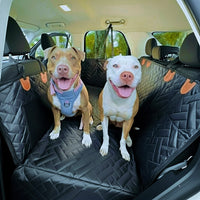
This guide explains what actually fails with “one-size” seat covers, which features help prevent those failure modes, and how to compare options without relying on vague marketing terms. If you want a structured option built around a flatter platform, you can see the product we designed here: Hard Bottom Dog Seat Cover.
Why Large Dogs Change The Seat Cover Problem
Large dogs do two things that expose weaknesses fast:
- They concentrate load. A big dog often plants weight on a smaller footprint, especially when standing to look out the window.
- They create dynamic movement. Bracing on turns, push-offs during entry, and shifting positions all pull on straps and anchors.
When a cover is not built for that, you often see the same outcomes: the middle sags into the footwell, the surface drifts sideways, seams abrade faster where paws “launch,” and the cover starts to bunch up instead of staying flat.
Common Failure Modes In Large-Dog Setups
Instead of shopping by buzzwords, identify the failure mode you are trying to prevent.
- Footwell sag: the center dips, your dog slides toward the middle, and footing feels like a swing.
- Drift: the cover migrates left or right over a few drives and exposes upholstery at the edge.
- Edge collapse: the front edge folds when your dog steps in, which can spook anxious riders.
- Seam abrasion: grit and claws wear seams at the front edge and centerline where paws repeatedly land.
- Moisture breakthrough: wet coats or spills leave the seat damp because the barrier is compromised.
Two Quick Checks Before You Buy Anything
These checks are starting points, not universal standards. Vehicle geometry and dog behavior matter as much as the numbers.
Check 1: Sag Depth
Install your current cover, tighten it, then place a straightedge across the bench where paws land most. Measure the drop to the lowest point in the middle.
- Small sag: many dogs ride fine if drift is controlled and the surface does not feel like it moves.
- Moderate sag: bracing on turns and slide-to-center behavior becomes more common, especially for stand-and-watch riders.
- Large sag: owners often describe a swing-like feel in deep footwells.
If you prefer a note-taking range, many owners treat around 1 inch as “small,” 1 to 2 inches as “moderate,” and 2 inches or more as “large,” but your dog’s behavior is the tie-breaker.
Check 2: Drift Photo Check
After tightening, take a photo of the cover edge aligned with a seat seam near a door. Do two brief drives with normal turns and stops, then take the same photo again.
If drift keeps returning after one careful reinstall and early retightening, you are usually fighting strap creep, shallow anchors, or lack of grip, not “comfort.”
What To Look For In The Best Dog Seat Cover For Large Dogs
Use this checklist to compare any brand. These features map directly to the failure modes above.
Flatness And Stability Features
- Footwell bridging: a structured base or insert that reduces center sag.
- Anti-slip backing: grip material that reduces sideways migration on seat fabric.
- Edge structure: a front edge that resists folding during entry.
Attachment And Hardware Features
- Wide straps: wider webbing can distribute tension better than thin straps.
- Secure buckles: hardware that holds tension without gradual loosening.
- Anchors that fit your seat crease: anchors that seat deep and resist pull-out during jump-ins.
Durability Features For Real Use
- Seam construction: reinforced stitching at high-wear edges and stress points.
- Fabric toughness: materials that tolerate claws and grit without fuzzing quickly.
- Wear-zone maintenance: a design you can fully wash and dry so residue does not stay trapped.
Moisture And Cleaning Features
- Water barrier construction: know whether the cover relies on a coating, a membrane layer, or both.
- Seam approach: seams can wick moisture if the barrier fails, so drying matters.
- Cleaning practicality: the best cover is the one you can actually shake out, wash, and fully dry on your schedule.
Competitor-Neutral Comparison Table
| If Your Problem Is | Prioritize These Features | Alternatives That Sometimes Work |
|---|---|---|
| Sag Into The Footwell | Structured base or a platform insert, edge support | DIY footwell bridge, backseat platform insert |
| Drift And Bunching | Anti-slip backing, wider straps, secure buckles, strong anchors | Rubberized underlay, seat grippers, reinstall and retighten routine |
| Seam Wear And Tears | Reinforced stitching at stress zones, tougher fabric, fewer weak panels | Nail filing, seam vacuuming, protective top blanket |
| Wet Coats And Mud | Clear water barrier construction, easy drying, washable design | Towel layer on top, rotate covers to allow full drying |
Harness Use And Travel Safety
If you use a car harness, a cover with seatbelt access can make it easier to route the tether without bunching fabric around the buckle area. A seat cover can help with footing and seat protection, but it is not a restraint system. For a plain-language overview of safe pet travel and why restraint reduces distraction for the driver, see the AVMA’s guidance on pets in vehicles. If you are comparing harness options, the Center for Pet Safety harness test results is a practical place to start because it summarizes independent evaluations.
When A Structured Hard-Bottom Is Not The Best Choice
Hard-bottom designs can help with sag and footing, but they are not automatically the right move.
- If your dog lies down calmly: a standard hammock or bench cover may be plenty.
- If your current sag is small and drift is controlled: improving install tension, adding seat grippers, or using a rubberized underlay may solve the problem.
- If the bench does not fit your setup: two large dogs on a narrow bench is a space problem. Zoning often works better than any cover.
- If you remove the cover often: structured inserts can be bulkier, and convenience affects consistency.
Whisker Bark Hard Bottom Seat Cover Specs And Test Method
“Reinforced” only means something when it maps to real parts. Here is how our cover is built, plus where we document the method we used to evaluate sag and attachment creep.
- Structured base: rigid insert designed to bridge the footwell and reduce center sag.
- Attachment: metal support straps, plus anchors and buckles designed to hold tension under repeated entry and exit.
- Fabric: heavy-duty Oxford fabric with double-stitched seams in stress areas.
- Water barrier: waterproof-coated construction intended to reduce seat wet-through from wet coats and spills. Results vary based on seam wear and drying habits.
- Compatibility: seatbelt access flaps intended to support harness-based restraint setups without forcing the cover to bunch.
For the staged load method and what we measured (including sag depth and strap elongation), see We Tested Our Dog Seat Cover To 400 Pounds. That write-up explains the bench-mounted setup and the stepwise loading approach so you can judge the methodology before you buy.
Real-World Comfort Notes For Large Dogs
For many large dogs, “comfort” starts with a surface that stays flatter and does not shift underfoot. When a cover drifts or sags, dogs often brace more and reposition more, especially during turns. If your dog rides hot, prioritize airflow features and build a routine that includes water breaks and cooldown time on longer drives.
Final Thoughts
The best dog seat cover for large dogs is the one that stays anchored, stays flatter through the footwell, and survives daily grit and wet rides without turning into a maintenance project.
If you want a structured option built around stability, you can see the Whisker Bark Hard Bottom Dog Seat Cover. For sizing and fit, use the dog seat cover size guide before ordering.
Share