

Physical Therapy vs Dog Wheelchair vs Surgery: How to Decide
Your dog is losing mobility, and you need to choose the next step: PT, a surgical or neurology consult, or a wheelchair. The fastest way to choose is to identify what fails first in normal life, then match that failure to the safest next move. Below is a practical framework, plus when dog wheelchairs can make daily essentials safer.
Decide Based On What Fails First
- Pain-Limited But Coordinated: Choose PT and a vet-guided pain plan before adding major devices.
- Weakness With Knuckling Or Dragging: Get a vet or neurology check, then use PT for gait control.
- Structural Instability Or Post-Op: Follow surgical restrictions first, then add support only when cleared.
- Handling Or Environment Barriers: Add support sooner if lifting, floors, or potty trips are unsafe.
Pick the one that explains your dog’s biggest daily “failure point.” If your dog can place feet correctly but quits early, sits down, or stiffens after activity, pain and fatigue are often driving the limit. If toes flip under, nails scrape, paws cross, or steps land unpredictably, coordination can be the limiting factor even if your dog is trying hard.
Structural problems tend to look like mechanical instability: a limb that “gives way,” a joint you are protecting, or a post-op plan that limits motion regardless of your dog’s enthusiasm. Handling and environment limits are about safety, not motivation: slick floors, stairs, narrow hallways, or a caregiver who cannot safely lift or steady the dog without risking a fall.
When Physical Therapy Is The Best Next Step
PT is usually the best first move when your dog can still bear some weight, can place paws with reasonable accuracy, and improves a bit after a short warm-up. A rehab professional can tailor strengthening, range-of-motion work, and gait retraining to what your dog can actually tolerate (VCA overview: physical rehabilitation for dogs).
Two common reasons PT stalls are doing too much too soon and letting home surfaces sabotage form. If your dog is predictably worse later that day or the next, treat that as overload and ask the rehab team to adjust rather than pushing through. If your dog slides on smooth floors, scuffs at thresholds, or panics on turns, traction and simpler routes can matter as much as any exercise choice.
PT also tends to plateau when pain is not addressed alongside movement. Your vet is the right person to guide pain management, and the AAHA pain management guidelines explain why pain control can change function and participation.
When To Pause And Get A Surgical Or Neurology Opinion
This guide cannot tell you whether your dog needs surgery, but it can set a firm boundary: if your dog’s function or pain changes suddenly, get a vet or specialist opinion before you “test” strength, add longer walks, or introduce new equipment. Some causes can be time-sensitive, including intervertebral disc disease, so a fast conversation matters more than finding the perfect home workaround.
- Sudden loss of function: New inability to stand, walk, or use a limb normally.
- Rapid worsening: Noticeable decline over hours or a couple days.
- Escalating pain: Increasing signs of pain in dogs, especially at rest.
- Bladder or bowel changes: New leaking, inability to urinate, or unusual straining.
- Skin or incision concerns: Open sores, hot swelling, discharge, or unusual heat.
Post-op recovery is its own lane. Even if your dog seems “ready,” follow the surgeon’s restriction timeline exactly, and treat any support tool as controlled assistance, not a way to add extra activity.
When A Wheelchair Is The Practical Bridge
A wheelchair earns its place when it makes essential movement safer and more repeatable: potty trips, short outdoor loops, or moving around the house without falls and frantic scrambling. It is often a good bridge when rear feet scuff or drag, stamina runs out before the task is done, or you cannot safely support your dog’s weight without straining your back. It can also complement PT by letting your dog practice cleaner movement instead of constantly collapsing or twisting to compensate.
Before you commit, check whether it will work in your actual home: doorway width, hallway turns, thresholds, and where the cart will live when not in use. Then do a quick fit reality check: your dog’s back should look level rather than tipped up or sagging; the front should not be “pulled down” by rear support; and your dog should be able to step without the frame bumping legs or forcing an awkward stride. If the cart drifts left or right, or one wheel seems to lead, you are usually looking at asymmetry in setup or how your dog is sitting in the harness.
Prioritize comfort and control: aligned posture, no rubbing or pinching at armpits or groin, and a stable roll that does not tip on turns. Supervise every session and ramp up gradually with short sessions in the first week. Stop and reassess if you see rubbing, distress, tipping, refusal to move, a sudden mobility change, or escalating pain, and factor in your home layout, indoor traction, outdoor terrain, and caregiver handling ability.
If something feels off, change the safest variable first: slow down, widen turns, and move to a quiet, grippy surface before you start tightening straps. “Hanging” in the frame often means support is carrying weight in the wrong place; pulling to one side often points to uneven tension or the harness sitting off-center; freezing indoors often happens when the first practice area is narrow, slippery, or noisy. Make one small adjustment, walk a few steps, and recheck comfort before extending distance.
| If You Notice This | Common Cause | Safer First Adjustment |
|---|---|---|
| Red marks or rubbing at straps | Friction, strap placement, or too much tension | Stop, reposition, loosen slightly, then recheck after a few steps |
| Tipping or wheel lift on turns | Turning sharply, moving too fast, or unstable balance | Slow down, widen turns, and practice in an open area first |
| Pulling to one side | Uneven strap tension or off-center harness position | Recenter the harness and match strap tension side-to-side |
| Sagging or “hanging” in the frame | Support points carrying weight in the wrong spot | Pause and rebalance support so posture stays level and natural |
| Refusal or freezing | Too much demand, slick flooring, or a startling surface | Reset to grippy ground, ask for a few steps, and end early |
Final Thoughts
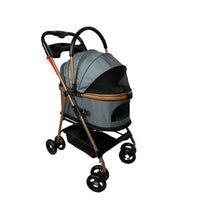
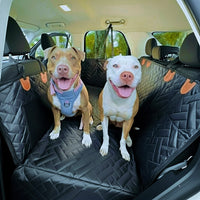
If your dog is coordinated but pain-limited, PT plus vet-guided pain control is usually the cleanest first move. If coordination is failing, weakness is progressing, or symptoms change quickly, prioritize a vet or specialist consult before you push activity. If daily essentials are unsafe or impractical, the Whisker Bark dog wheelchair can be a practical bridge for safer, repeatable movement. For car rides to rehab or appointments, a Whisker Bark dog seat cover with a waterproof layer helps protect seats from accidents and muddy paws.
```
Share