

Rehabilitation And Physical Therapy Options For Dogs With Mobility Loss
Rehabilitation for dogs with mobility loss is rarely a single treatment. It is a progressive plan that combines exercise, hands-on work, supportive modalities, and sometimes assistive devices, tailored to whatever is limiting your dog most. This article walks through the main rehab options, what each one is for, and when home-focused support is enough versus when a formal rehab visit makes more sense. In some cases, assistive gear like a properly fitted dog wheelchair fits into that plan, when your veterinarian agrees it matches your dog's current stage.
The Main Rehab And PT Options Available
Rehab clinics combine multiple tools rather than relying on one approach. VCA Hospitals describes rehabilitation therapy and therapeutic exercises as customized plans built from several techniques depending on the patient. The American College of Veterinary Surgeons describes how rehabilitation therapy supports recovery and function. Which tools matter for your dog depends on the primary challenge: weakness, poor balance, limited range of motion, pain, or trouble walking comfortably.
Therapeutic Exercise
Therapeutic exercise targets strength, balance, controlled range of motion, and proprioception. The goal at home is not to make exercises harder, but cleaner and more controlled. Choose a version your dog can do slowly without twisting or compensating. If your dog starts to rush, lean, or slip, the exercise needs to be simplified or the session should end sooner. Quality of movement matters more than repetitions.
Hydrotherapy And Underwater Treadmill
Hydrotherapy, including the underwater treadmill, supports gait practice for dogs who struggle with full weight-bearing on land. These tools let a dog practice controlled stepping with less impact. Think of it as movement practice rather than cardio. Your rehab team can advise on timing, which matters especially after surgery or during sensitive recovery stages.
Manual Therapy
Manual therapy covers gentle joint and soft-tissue work performed by qualified professionals for comfort support. It can be useful as part of a broader plan, but home over-replication is a common mistake. Stretching too aggressively is one of the biggest. If your veterinary team has shown you a range-of-motion technique, follow the exact limits you were taught and avoid adding force.
Supportive Modalities
Heat, ice, and therapeutic laser are supportive modalities used to improve comfort as part of a larger plan. Results vary by dog and condition. These are best understood as tools that may help rather than guaranteed fixes, and they work best when paired with the other elements of a rehab plan rather than used alone.
Assistive Devices
Assistive devices can make rehab safer and more productive by reducing unsafe compensations. Boots help with scuffing. Harnesses and slings help with transfers. Wheelchairs allow controlled activity for dogs who cannot safely support themselves for long. The right device depends on what is currently limiting your dog: weakness, coordination, stamina, comfort, traction, or confidence.
Match The Option To What Is Limiting Your Dog
Many mobility problems look similar at first. Sorting the main limiter helps you choose the safest lever to pull first, whether that is comfort, coordination, endurance, traction, or fit.
| What You Notice At Home | Often Points Toward | Where To Focus First |
|---|---|---|
| Won't start moving, tight posture, flinches when touched | Comfort problem first | Pause strengthening work. Ask your vet about comfort support and activity limits before adding exercise. |
| Knuckling, scuffing, crossing legs, delayed paw placement | Coordination challenge | Short, slow practice on high-traction surfaces with wide turns. Consider formal rehab if steps cannot stay controlled. |
| Starts okay, then collapses behind within minutes | Endurance limit | Shorten sessions, end while posture is controlled. If fatigue shows up sooner each day, check in with your vet. |
| Only struggles on slick floors or tight indoor paths | Environment and traction | Fix surfaces first. Add runners and create a wide practice lane. Many dogs look steadier when the floor stops sliding. |
| Harness or wheelchair shifts, rubs, or causes freezing | Fit or setup problem | Adjust before adding time. Skin check after every use. Comfort and alignment come before duration. |
When Home Support Is Enough Vs Book A Formal Rehab Visit
Many owners can do helpful baseline work at home when the limiter is traction, mild weakness, or low confidence. Formal rehab becomes more valuable when you need precise progression, safer handling, or specialized equipment.
Home-focused support often fits when your dog can take a few controlled steps on non-slip flooring, you can prevent rushing and slipping, and movement quality is stable or improving week to week. Book a rehab visit soon when you are seeing frequent knuckling or falling you cannot manage safely, when your dog needs hands-on instruction for transfers or stairs, when progress stalls for about two weeks despite consistent practice, or when your veterinarian has prescribed post-op restrictions and you want a guided plan.
When To Pause And Call Your Vet
Rehab work is still physical work. Pause sessions and contact your veterinarian promptly if you notice a sudden inability to stand or take supported steps, persistent distress with movement, new repeated falls or dragging that worsens over hours to a couple of days, open sores or significant swelling in a limb, new loss of bladder or bowel control, or refusal to move paired with a tight, guarded posture.
For day-to-day sessions, the rule is simple: stop if your dog cannot maintain a controlled, comfortable posture. That includes rubbing from gear, repeated slipping, panic, or a sudden change in gait quality. Supervise every session, keep early practice short, do a skin check under any straps after use, and reassess if you see distress, tipping, refusal, or sudden mobility change. Home factors matter too: flooring, doorway width, lighting, and your own lifting limits all affect what is safe to practice.
Final Thoughts
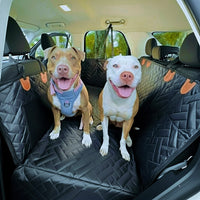
The most useful rehab plan is the one you can repeat calmly: safe footing, short sessions, controlled form, and clear stop rules. Combine the options that match your dog's main limiter, involve your veterinarian when you need tighter guardrails, and consider a formal rehab assessment when progress stalls. If mobility support is part of the plan, a properly fitted Whisker Bark dog wheelchair can support controlled movement when your veterinarian agrees it is appropriate. For car rides to rehab visits and cleaner transfers on session days, a waterproof Whisker Bark dog seat cover helps protect upholstery from wet paws and accidents.
Share