

IVDD Stages In Dogs: Walking Changes And Mobility Planning
Stage labels can feel like a verdict, especially when your dog was walking yesterday and today they are wobbling, refusing steps, or crying when moved. Here is the helpful reframe: IVDD “staging” is mainly a way to describe function and urgency, not blame and not a guarantee of what will happen next.
Pain can make a dog guard and refuse movement, and spinal cord irritation or compression can change coordination and paw placement. That overlap is why careful handling and veterinary guidance matter most when signs are changing. After your dog is stabilized and your veterinarian clears controlled activity, supportive mobility tools may help some dogs safely keep short routines, and dog wheelchairs can be one later option for the right dog with supervision.
If you are new to mobility aids and safe setup basics, start here: dog wheelchair guide for beginners.
What IVDD Stages Means In General
When vets talk about “IVDD stage” or “severity,” they are usually describing observable function: pain level, walking quality, paw placement, ability to stand, and sometimes bladder control. Different hospitals may use slightly different wording, but the purpose is similar: communicate urgency and guide next steps. For example, one widely shared client education staging framework describes a functional progression from pain-only to paralysis with or without deep pain sensation. A common stage-by-function description shows what those labels generally mean in practice.
Stage Breakdown In Plain Language
To avoid pretending there is one official system used everywhere, the sections below describe what owners often see by function. Your vet may use different labels, but safety priorities tend to track with how stable and coordinated your dog is.
Pain-Only Or Pain-Dominant Stage
- Reluctance to move, guarding, tense posture, trembling, or yelping.
- Walking can look normal, but your dog may move less to protect the painful area.
- This is often mistaken for “stubbornness” when it is pain-driven avoidance.
Wobbly Walking Stage
- Unsteady gait, drifting, stumbling, scuffing nails, or delayed paw placement.
- Knuckling can appear, where the top of the paw contacts the ground briefly.
- Fall risk rises because footing and corrections are slower.
Non-Ambulatory Stage
- Your dog cannot walk safely even if they can still move the legs.
- Standing may be brief or unsafe, with frequent collapse or inability to coordinate steps.
- Short “practice” attempts can increase risk if they trigger falls or twisting, which is why vets often emphasize strict restriction early in management plans. Why strict confinement can matter in spinal cord cases
Paralysis Stage
- Inability to move the legs voluntarily.
- Some neurological assessments, including deep pain perception, are performed by a veterinarian or neurologist and should not be tested at home. Prognosis discussions often hinge on deep pain status in acute disc extrusion. How deep pain perception relates to prognosis in acute IVDD research
Walking Ability By Stage: What It Can Look Like Day To Day
“A few steps” is not the same as “safe walking.” The practical question is whether your dog can move without falling, twisting, or panicking.
Walking But Unstable
- Drifting, stumbling, knuckling, scuffing, crossing limbs, or frequent pauses.
- Your dog looks like they are working hard to stay upright.
- You feel like you are catching them, not guiding them.
Unsafe Walking
- Repeated falls, panic, or clear worsening after a short attempt.
- Inability to coordinate steps or stand without collapsing.
- Sliding on smooth floors, especially at turns and transitions.
If your vet approves controlled movement for potty breaks, choose flat, non-slip surfaces and keep it brief and supervised. If you cannot keep the body steady and aligned, pause and ask your vet what movement is allowed right now.
Pain Vs Paralysis: Why They Get Confused
Pain and neurologic function changes can look similar, especially in an anxious moment. These observations help you describe what you see without trying to diagnose.
Pain-Leaning Patterns That Can Mimic Weakness
- Freezing, refusing steps, trembling, tense posture, or a hunched back.
- Yelping when moved, sensitivity to touch, or guarding.
- Reluctance to reposition or get comfortable.
Neurologic Function Changes You Might Notice
- Knuckling, toe dragging, delayed paw placement, or scuffing nails.
- Wobbliness that looks poorly coordinated, not just “slow.”
- Collapse, inability to stand, or a rapid change over a short period.
Because pain and neurologic changes can coexist, stage language is a communication tool for your vet team, not a label to apply at home.
How Mobility Can Change Over Time
Mobility shifts for two common reasons: (1) pain control and protective guarding change how much a dog is willing to move, and (2) neurologic function changes alter coordination and paw placement. Recovery is not always linear, and better days and harder days can happen as inflammation and routines change.
This variability is one reason many veterinary neurology resources stress strict restriction early, followed by a structured plan rather than “testing progress” through more activity. Why excessive walking around the home is discouraged during cage rest
Recovery Likelihood: What Vets Can Estimate And What They Cannot
Owners naturally ask for a timeline or a guarantee. Vets estimate outlook using neurologic status, how quickly signs changed, exam findings, imaging when needed, and response to the plan. In acute thoracolumbar disc extrusion, deep pain status is one of the important markers discussed in the research literature, but it must be assessed by trained clinicians. How prognosis discussions use neurologic status and deep pain perception
If you are unsure what your dog’s “stage” means for safety today, ask your vet these three questions: What movement is allowed right now? What changes would be urgent? What is the next checkpoint for reassessment?
Mobility Planning: What To Do At Each Functional Stage
These are planning principles to support safety and reduce setbacks. Always follow your vet’s instructions first, especially around restrictions.
Pain-Dominant Stage Priorities
- Strict motion control using the recovery setup your vet recommends.
- Traction-first floors with runners or non-slip paths for any necessary steps.
- Lift with support under front and rear, keep the spine level, avoid twisting.
- Controlled, brief potty breaks only if your vet approves.
Wobbly Walking Stage Priorities
- Fall prevention: block stairs, remove obstacles, keep the environment calm.
- Controlled movement only: no long walks, no sharp turns, no slippery floors.
- Set up food, water, and bedding to reduce repositioning needs.
- Update your vet if stability worsens or knuckling and dragging increase.
Non-Ambulatory Or Paralysis Stage Priorities
- Urgency awareness: inability to walk safely can require rapid veterinary assessment.
- Plan safe transfers to avoid twisting and rushed lifting.
- Prioritize skin and comfort checks: bedding, positioning, calm routines.
- Ask your vet about nursing care guidance and what movement is allowed.
Mental Enrichment With Minimal Motion
- Food puzzles that do not encourage bouncing or twisting.
- Lick mats placed at a comfortable height and angle.
- Low-arousal scent games using a few treats in a towel near the crate.
- Quiet companionship and predictable routines that reduce stress.
Safe Observation And Mobility-Support Readiness
This section is for communicating with your vet, not deciding treatment.
Observation Checklist To Share With Your Vet
- Paw placement changes: knuckling, scuffing, delayed correction.
- Balance and coordination: drifting, stumbling, crossing limbs, collapsing.
- Comfort signals: inability to settle, trembling, guarding, sensitivity to touch.
- If your vet says it is appropriate, short videos with minimal movement on a non-slip surface.
Do-Not-Do List
- Do not force walking to test function.
- Do not do stairs, couches, jumping, or play sessions.
- Do not do range-of-motion tests at home.
- Do not test pain perception at home.
If Using Supportive Gear After Clearance
- Check for rubbing and stop if you see redness, hair disruption, or strap licking.
- Watch posture: sagging, awkward stance, or worsening coordination.
- Pause if turns feel unstable or tracking is not straight.
Mistakes That Increase Risk Or Slow Progress
Recovery Mistakes
- Letting your dog roam because they seem improved.
- Allowing uncontrolled turning on slippery floors.
- Lifting without support under front and rear, creating twisting.
Mobility-Aid Mistakes When Cleared
- Rushing the first session or increasing time too quickly.
- Poor fit leading to rub points and refusal.
- Trying uneven terrain too early, increasing tipping risk.
- Leaving the dog unsupervised at thresholds and doorways.
Final Thoughts
IVDD stage language is mainly a way for vets to describe function and urgency, not to predict your dog’s future with certainty. Your job is practical: reduce motion, prevent twisting, make footing safer, and contact your vet when function changes. If you want to understand how clinicians talk about acute thoracolumbar disc extrusion and why neurologic status matters, ACVIM consensus guidance summarizes the evidence-based framework behind many veterinary recommendations.
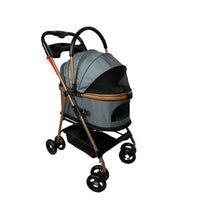
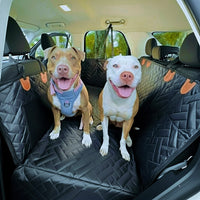
If your vet clears mobility support later for short, controlled routines, the Whisker Bark dog wheelchair can support supervised movement that prioritizes comfort checks, stable rolling, and predictable surfaces. For careful transport during recovery planning, many owners also like using a waterproof Whisker Bark dog seat cover to help protect car interiors while keeping loading and unloading calm and contained.
Share