

What Is Hip Dysplasia In Dogs And How It Affects Mobility
Your dog hesitates to jump, struggles on stairs, or seems sore after normal activity, and now you keep hearing the words “hip dysplasia.” The worry is real, and the confusion is common because mobility changes can look like laziness, aging, or “weak legs” when the underlying issue is often about joint mechanics and compensation.
In general, hip dysplasia refers to a hip joint that does not fit or stabilize as it should. Over time, that altered fit can contribute to joint looseness, abnormal motion, and uneven loading, which may lead to discomfort and arthritic change. If your veterinarian recommends mobility support for rear-end assistance, a dog rear leg wheelchair may be one supportive option in specific situations, but it is not the first or only path for most dogs.
What is Hip Dysplasia
Hip dysplasia is generally described as abnormal development or fit of the hip joint, where the “ball” (femoral head) and “socket” (acetabulum) do not align and stabilize as they should. That can create joint laxity, abnormal motion, and uneven loading, which can contribute to discomfort and progressive joint changes over time. Veterinary resources like the American College of Veterinary Surgeons overview and VCA’s educational guide describe hip dysplasia as a developmental condition tied to hip laxity and altered joint mechanics.
Hip Dysplasia Versus Arthritis
Hip dysplasia is primarily about joint structure and stability. Arthritis (osteoarthritis, degenerative joint disease) describes longer-term cartilage and bone changes that can develop from chronic abnormal loading. Many dogs with hip dysplasia develop arthritis over time, but the terms are not identical. Merck Veterinary Manual explains how hip dysplasia may present, and Merck’s osteoarthritis overview explains why pain control can change what owners see day to day.
How Hip Dysplasia Shows Up At Home
Hip dysplasia often shows up as a collection of repeatable patterns, not one dramatic event. Common examples described in veterinary education resources include stiffness after rest, reluctance with stairs or jumping, shortened rear stride, rear-end sway, and sometimes bunny hopping when running or climbing stairs. VCA’s hip dysplasia guide and Veterinary Partner (VIN) both provide plain-language descriptions of typical signs.
Genetics And Risk Modifiers
In many breeds, hip dysplasia has a strong heritable component, which is why screening programs and breeding recommendations exist. The Orthopedic Foundation for Animals provides information on hip evaluation and data collection aimed at supporting healthier breeding decisions.
Many veterinary sources also describe hip dysplasia as multifactorial. That means genetics matter, and factors like growth, body condition, conditioning, and environment can influence how symptoms show up. VCA discusses genetics plus contributing factors such as diet, environment, exercise, and growth-related influences in its overview.
How Vets Confirm Hip Dysplasia
A veterinary exam plus imaging is how hip dysplasia is typically confirmed and staged. At home, you can observe patterns, but you cannot confirm joint laxity or arthritis severity without a clinical workup.
Common Imaging Terms You May Hear
- Standard hip radiographs: x-rays used to evaluate joint shape and arthritic change.
- OFA evaluations: a radiographic screening program used for hip assessment and data tracking.
- PennHIP: a radiographic method that quantitatively measures hip joint laxity (distraction index) and is designed to help predict risk of osteoarthritis.
If you want to understand what PennHIP measures and why it is used, this PennHIP overview and the PennHIP manual explain the method and terminology.
Pain Versus Weakness: What You Can Notice Without Guessing
Pain and weakness can look similar. The most useful approach is to record what you see in a repeatable way so your veterinarian or rehab professional can interpret it in context.
Patterns That Often Look More Pain-Leaning
- Stiff start after rest that improves after a few minutes of movement.
- Specific avoidance behaviors (stairs, jumping, getting up onto furniture).
- Reluctance to extend the hip fully or a shortened rear stride.
Patterns That Often Look More Endurance Or Strength-Leaning
- Looks okay at the start of a short walk, then becomes wobblier or more uneven later.
- Weight-shifts forward, relies heavily on the front end, or needs frequent pauses.
- Struggles most on slippery floors or during turns, then looks better on high-traction surfaces.
Why this matters: chronic pain can reduce activity, and reduced activity can reduce muscle support, which can worsen stability. AAHA Pain Management Guidelines emphasize that recognizing pain and tracking patterns at home are key parts of building a practical plan with your veterinary team.
A Two-Minute Home Check To Bring Your Vet Better Information
This is not a diagnosis. It is a simple way to observe patterns so you can communicate clearly.
- Video from two angles: record 15 to 30 seconds from the side and from behind on a flat, non-slip surface.
- Start versus end comparison: take one clip at the start of the walk and one after 5 to 10 minutes to see whether fatigue changes posture.
- Write down triggers: stairs, getting into the car, slippery floors, tight turns, rising after rest.
- Write down helpers: warming up, traction mats, shorter loops, slower pace, rest breaks.
Evidence-Based Management Options Owners Should Know
Hip dysplasia management is usually multi-layered. Your veterinarian chooses options based on your dog’s age, severity, pain level, and lifestyle. These are common categories discussed in veterinary orthopedic and osteoarthritis guidance.
- Weight management and muscle support: reducing excess body weight and protecting muscle mass can change comfort and function for many dogs.
- Pain control: medications and multimodal strategies are often used for osteoarthritis pain under veterinary supervision.
- Rehabilitation and controlled exercise: targeted strengthening, range-of-motion work, and low-impact conditioning can be part of conservative management.
- Surgery in selected cases: orthopedic surgeons may discuss surgical paths depending on age and hip status.
For a high-level, evidence-informed view of osteoarthritis care that often applies to dysplasia-related arthritis, the COAST international consensus recommendations summarize common management pillars, and ACVS outlines diagnostic and treatment considerations for hip dysplasia.
Where Mobility Aids Fit
Mobility aids are supportive tools, not treatments. Many dogs do best starting with the simplest support that solves the immediate problem safely (traction, ramps, harness help), then escalating only if needed.
Often Considered First
- Traction changes: runners, rugs, and non-slip paths to reduce slipping and panic.
- Ramps and step solutions: to reduce repeated high-load jumping and stair work.
- Harnesses and slings: for short bursts of rear-end help (stairs, car entry, quick potty trips).
When A Wheelchair May Be Discussed
In some cases, a cart or wheelchair may be considered to support mobility and help a dog stay active with less stress on painful joints. VCA’s multi-modal pain management guide notes that some dogs benefit from assistive devices such as slings, harnesses, and in certain cases wheelchairs.
Important: For hip dysplasia specifically, wheelchair use should be guided by your vet or rehab professional. A cart is not a substitute for pain control or a rehab plan, and it should not cause new rubbing, distress, or instability.
If you are new to mobility aids and safe setup, start here: dog wheelchair guide for beginners.
If You Notice This, What It Can Suggest, And What To Do Next
| If You Notice This | What It Can Suggest | What To Do Next |
|---|---|---|
| Stiff start after rest, then loosens slightly | A pattern often reported with joint discomfort and warm-up effects | Record a short video, note time of day and activity, share patterns with your vet |
| Avoids stairs or jumping that used to be easy | Avoidance of high-load hip motion | Use ramps or step solutions, reduce repetition, ask your vet about a plan |
| Looks worse at the end of a walk than the beginning | Endurance limits, compensation, or pain that builds with use | Shorten loops, add rest breaks, track for 7 days, discuss with your vet or rehab professional |
| Slipping on smooth floors | Traction problems that can make mobility look worse than it is | Add runners or mats, avoid sharp turns, reassess on non-slip surfaces |
Safety Rules If Your Vet Recommends A Mobility Aid
- Fit and comfort first: alignment should look stable and nothing should rub, pinch, or twist.
- Supervision only: never leave a dog unattended in supportive gear.
- Gradual ramp-up: short sessions in the first week, then increase only if your dog stays relaxed and stable.
- Stop and reassess signals: rubbing, distress, tipping, refusal to move, sudden mobility changes, or pain escalation.
- Real-world reality check: home layout, indoor traction, outdoor terrain, and caregiver handling ability matter as much as the device.
When To Stop And Contact Your Vet Urgently
- Sudden inability to bear weight, acute pain behaviors, or suspected injury.
- New or escalating distress, yelping, or a major behavior change around movement.
- Repeated falls, collapse, or skin sores from any supportive gear.
What To Look For In Mobility Support If Your Vet Recommends It
If your veterinarian suggests a wheelchair or other support, these practical checks can make daily routines safer and more predictable:
- Adjustability and fit refinement support: the ability to fine-tune comfort and alignment.
- Comfort and anti-rub priorities: contact points that are easy to inspect so you can prevent friction early.
- Stable, predictable rolling: controlled movement on flat surfaces with manageable turns.
- Real-world usability: doorways, sidewalks, storage, and caregiver handling that matches your life.
If you are comparing options, how to choose a dog wheelchair can help you think through stability, fit, and real-life usability.
Reassurance For Worried Owners
You are not behind. Mobility changes are common, and they can feel heavy because the day-to-day looks different than it used to. Good information, small safety upgrades like traction and ramps, and a clear plan with your veterinary team can help you move forward without guessing.
Final Thoughts
Hip dysplasia is a joint mechanics issue that can change movement through pain, compensation, and reduced endurance. The most helpful next step is usually a veterinary exam and an individualized plan that matches your dog’s comfort, conditioning, and lifestyle.
If your vet recommends supportive mobility help, the Whisker Bark dog wheelchair can be part of a safety-first routine that emphasizes supervision, fit checks, and controlled sessions on predictable surfaces.
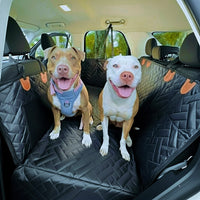
For outings and transport during mobility transitions, many owners also like pairing mobility support with a tear resistant Whisker Bark dog seat cover to help protect car interiors while keeping routines simpler.
Share