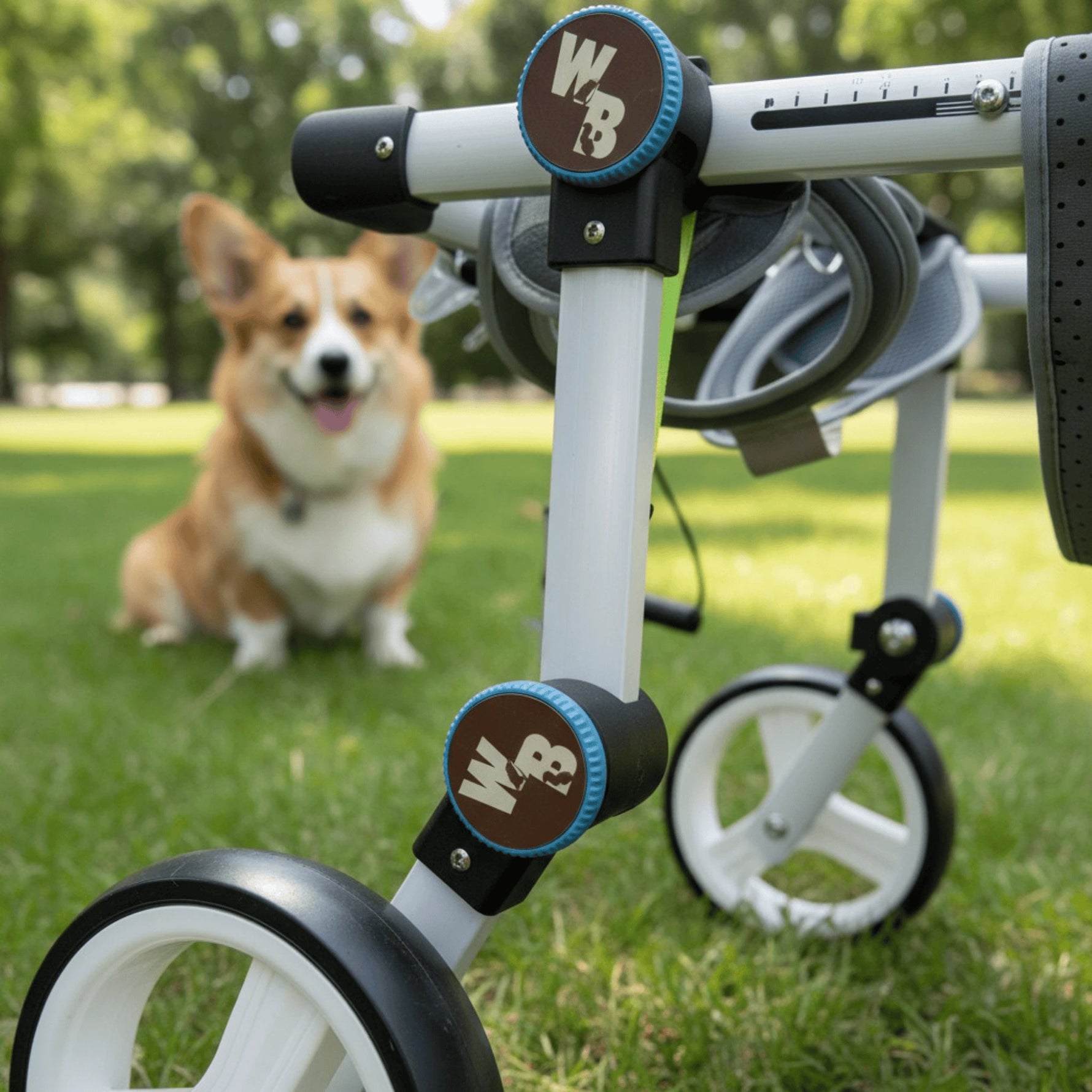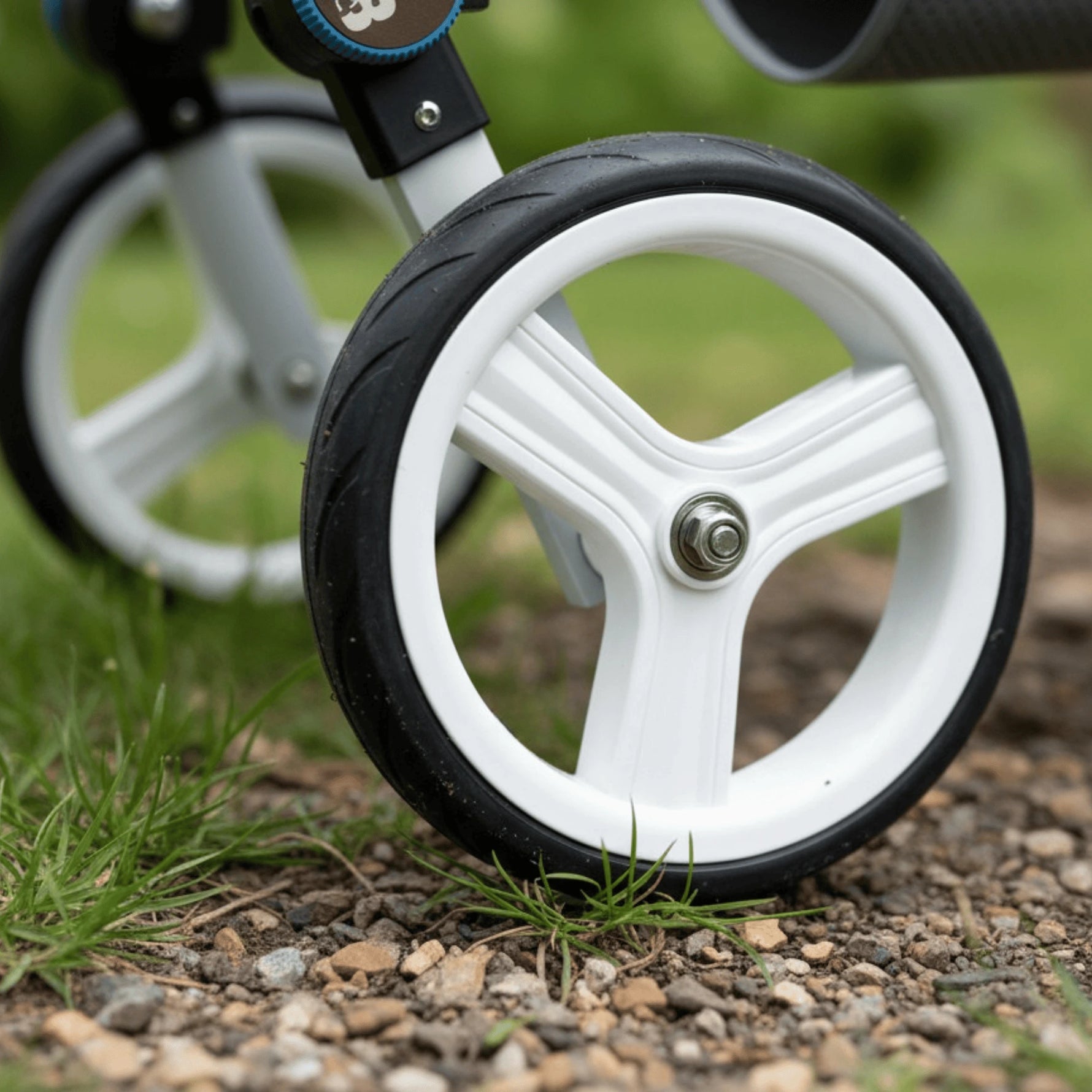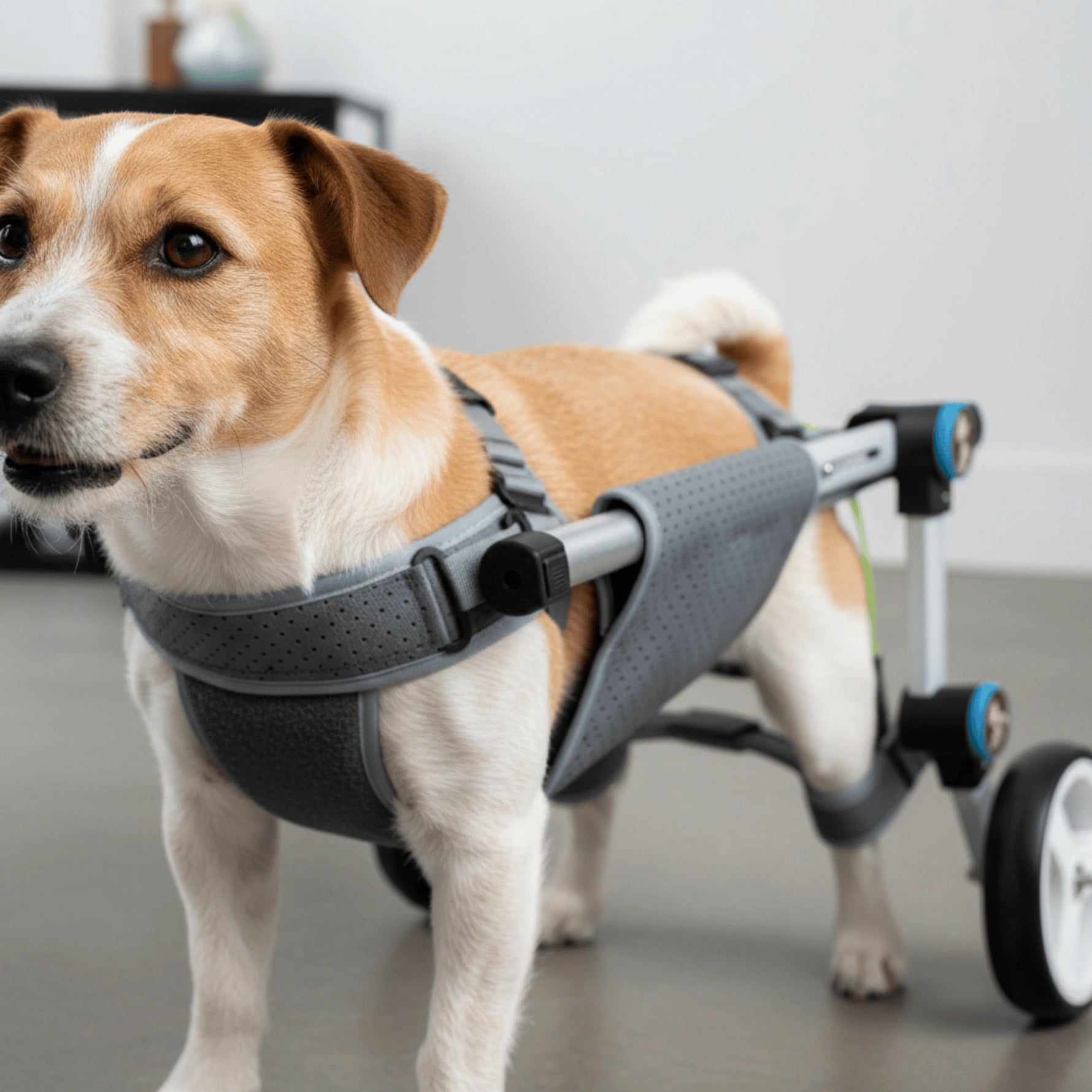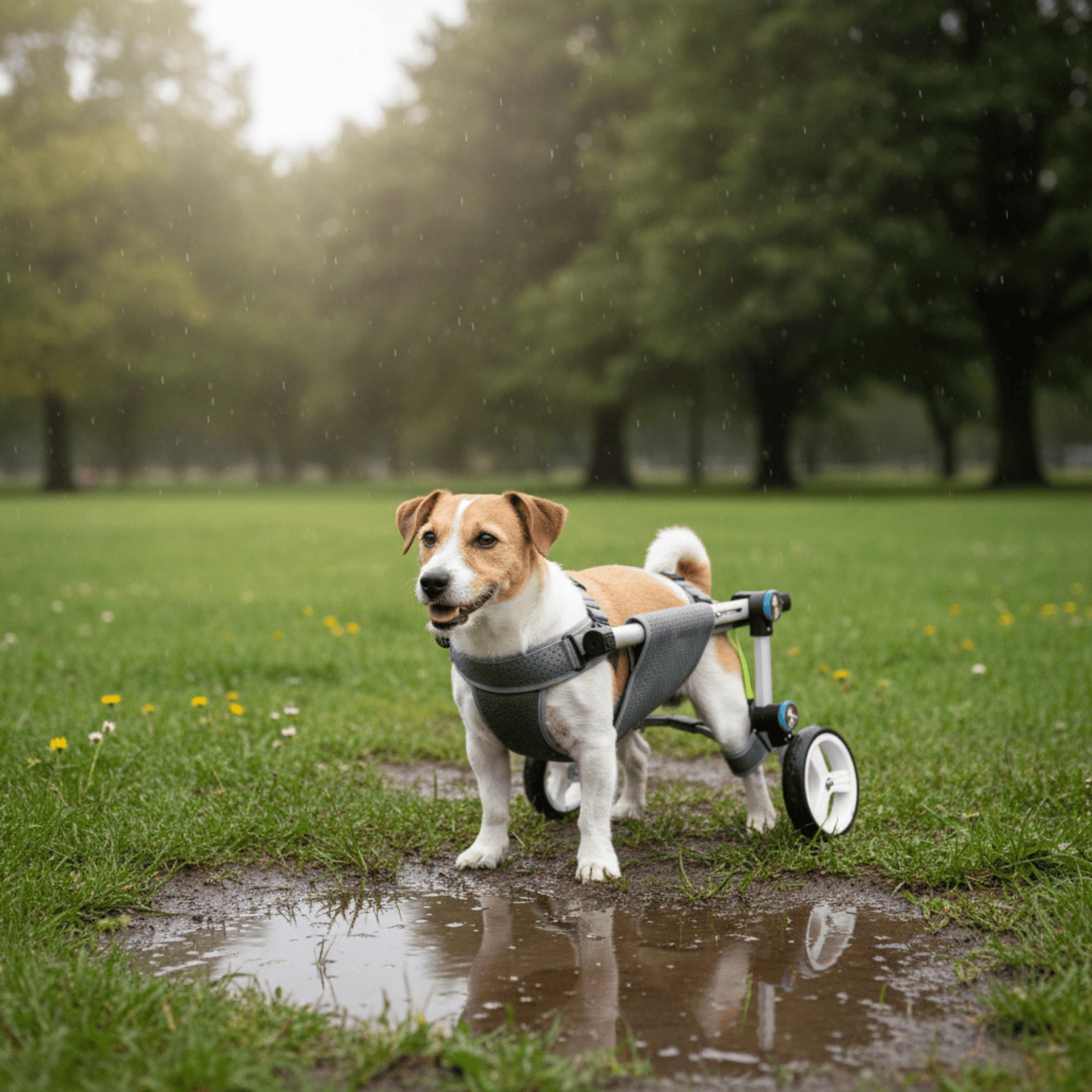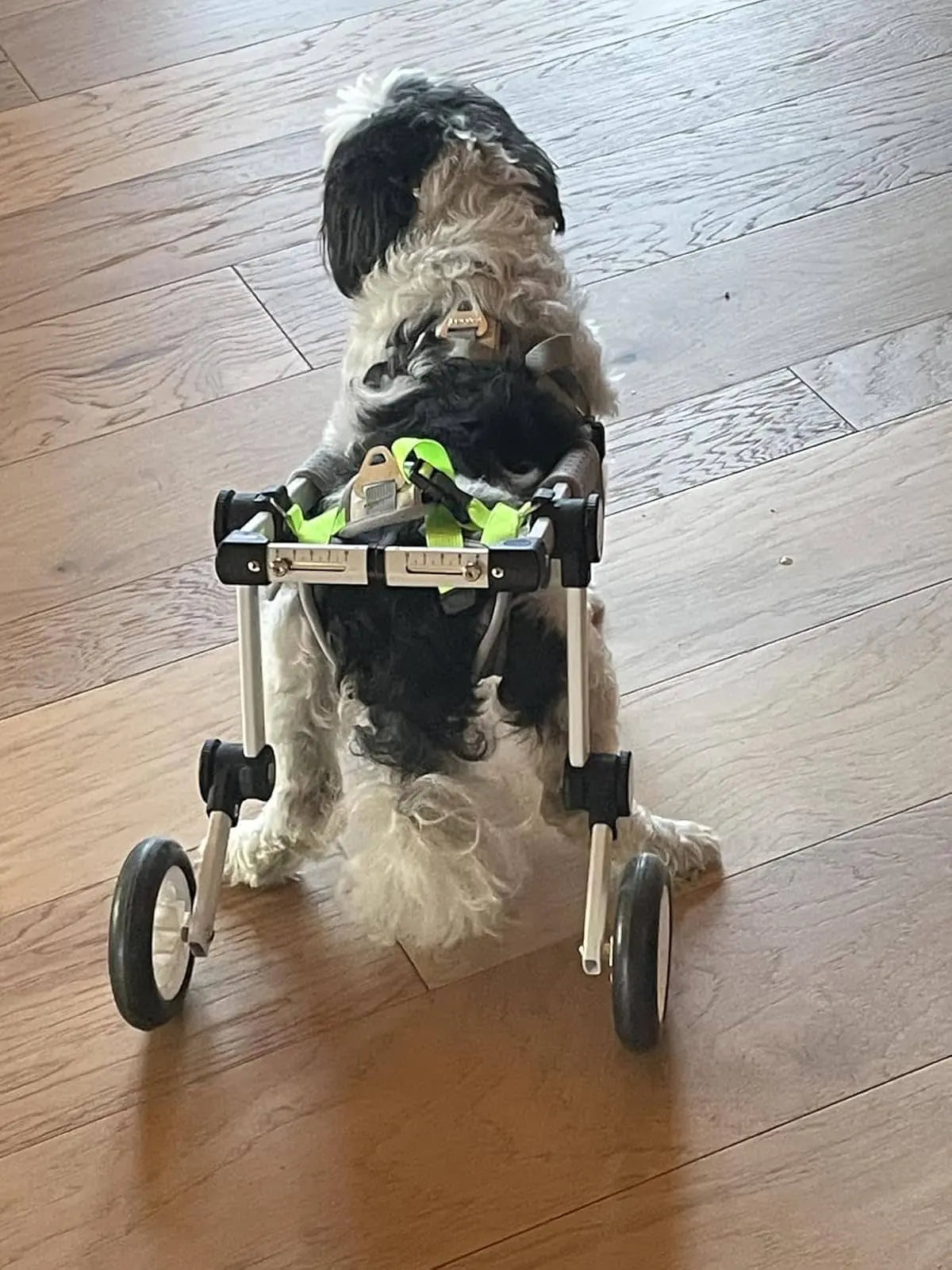
If your dog freezes, backs out, flails, or looks worried in a new wheelchair, the cause is usually practical, not personal: the frame feels unfamiliar (sound, vibration, new pressure points), the fit is slightly off, the floor is too slippery, early turns feel unstable, or your own leash handling is accidentally adding “trapped” pressure.
The goal of the first week is not distance or speed. It is calm exposure, comfort, and confidence building with a setup that helps your dog win early. If you are introducing a rear-support cart like our pet wheelchairs, the plan below focuses on tiny steps, clear pause signals, and simple at-home checks you can do to refine fit.
Answer: Use gradual desensitization plus rewards. Start with short, fully supervised sessions on high-traction surfaces. Aim for a relaxed posture and a few calm steps, then end while it is still going well. If your dog will not take treats, tries to escape, shows rubbing, looks at tipping risk on turns, or has a sudden mobility change, pause and reassess. This “go at the dog’s pace” approach is a standard behavior strategy used for fear and uncertainty, not just wheelchair training.
If you are still choosing or learning the basics, start with dog wheelchair basics, so that fit and use expectations are clear before you train.
Is A First Intro Session Appropriate Today
Use this quick self-check to decide whether today is a good day for the first session. If you cannot check most of these boxes, delay and set up for an easier win.
Your dog is calm enough to sniff and take treats (even if cautious).
Pain or discomfort seems stable today, not suddenly worse. AAHA notes that behavior and movement changes can be signs of pain, including reluctance on slippery flooring.
You can train in a quiet space without kids, visitors, or other pets hovering.
You have traction ready: a rug runner, yoga mats, carpet, or grippy grass.
You can supervise the entire session without rushing.
Helpful references for what “pain signs” can look like at home: AAHA’s owner-facing resources on signs of pain in dogs and common pet pain signs.
Before You Start: Set Up Your Dog For An Easy Win
Most first-session stalls happen because the environment and handling create “too much, too soon.” Your job is to reduce fear triggers before your dog ever tries to step forward.
Choose The Right Environment
Pick a quiet room with minimal echoes and distractions.
Use a traction-friendly surface, like a rug runner or yoga mats laid end-to-end.
Clear tight obstacles so your dog does not have to turn sharply right away.
Make The Wheelchair A Neutral Object First
Before you put anything on your dog, place the wheelchair on the floor and let your dog notice it at their own pace. Reward calm investigation (sniffing, looking, standing nearby). Do not push the frame toward your dog or trap them near it. This is the same gradual-exposure principle used in desensitization and counterconditioning, where intensity stays low enough that the dog can stay under threshold and learn.
For a plain-language refresher on the method: VCA’s overview of desensitization and counterconditioning and AVSAB’s guidance on common mistakes that slow fear progress.
Pre-Session Checklist
Treats: high-value, tiny pieces you can deliver quickly.
Gear staged: harness, straps, and wheelchair adjusted to your best starting point.
Leash ready: loose handling, no pulling.
Phone ready: record short clips from the side and behind for fit review.
Plan your exit: you will end early on purpose, even if it is going well.
The Two-Minute Fit Audit Before You Roll
This is not a substitute for professional fitting, but it catches the most common comfort issues that cause freezing and scrambling.
Frame level: From the side, the main frame should look roughly parallel to the floor, not “nose up” or “nose down.”
Hip alignment: Many wheelchair fitting guides aim the side “knuckle” area near the center of the hips and keep both sides symmetrical.
Symmetry check: From behind, the cart should look centered, with equal spacing left and right.
Twist and pinch check: No strap should be twisted, folded, or cutting into skin. If you see hair disruption right away, treat it as a fit problem, not a training problem.
Skin plan: Commit to a quick skin and coat check immediately after every session in the first week.
For examples of height/level and adjustment concepts, see a manufacturer adjustment overview like this wheelchair adjustment guide and a fitting manual such as this wheelchair user manual. Even if your brand differs, these references show the kind of “level and symmetrical” setup that reduces drift and discomfort.
First Session Steps: A 6 To 8 Minute Plan Without Forcing It
Move to the next step only if your dog can take treats and keep a reasonably relaxed body. If your dog escalates into panic, stop, remove gear calmly, reward, and try again later.
Step 1: Harness Contact Only
Put the harness on briefly, feed a treat, then remove it.
Success: takes treats, body stays soft, no frantic pawing.
Too fast: hard freeze, twisting away, refusal of treats, bolting attempts.
Step 2: Harness On With The Frame Nearby
With the harness on, place the wheelchair a short distance away. Reward calm looking or sniffing. No rolling, no attaching yet.
Success: curiosity, normal breathing, loose posture.
Too fast: tucked posture, trembling, repeated escape attempts.
Step 3: Stand In Position Without Rolling
Gently position your dog in the wheelchair, then reward stillness for 3 to 10 seconds. Keep movements slow to avoid sudden noises.
Success: weight looks balanced, no obvious pinching, can pause without scrambling.
Too fast: frantic backing, repeated flailing, frame wobble.
Step 4: One To Five Assisted Steps Forward
Use a treat lure close to the nose and ask for one calm step forward on the traction surface. Reward. Repeat up to five total steps if your dog stays relaxed.
Success: small forward shift and a step, even if slow.
Too fast: rushing, spinning, sudden wide turns, tipping risk.
Step 5: End Early On Purpose
Remove the gear calmly, give a treat, and let your dog rest. You are training predictability, not endurance.
Pro tip: In week one, progress is “more relaxed,” not “more distance.” If your dog will not take treats or tries to escape, the exposure is too intense. Back up a step, reduce noise and movement, and keep sessions shorter.
Progress Rules That Keep You Out Of Trouble
These simple thresholds prevent the most common mistake: adding time or complexity before your dog feels safe.
Green light to repeat or advance: your dog can take at least 5 treats during the session, stand calmly for 5 to 10 seconds, and take 5 to 15 slow steps on a straight line with a loose leash.
Yellow light, keep it easier: your dog moves but stays stiff, pants when the room is cool, or startles at the cart’s sound. Shorten the session and stay on straight lines.
Red light, stop and reassess: refusal of treats, repeated escape attempts, tipping risk, rubbing or redness, or a sudden change in mobility or comfort. VCA notes that if a pet becomes distressed during desensitization work, you should end and lower intensity next time.
Reference: VCA guidance on ending sessions before distress escalates.
Positive Reinforcement That Works Here And What Backfires
Wheelchair acclimation is a behavior change problem, not a stubbornness problem. Reward-based training helps your dog connect the new sensation with safety and good outcomes.
Do This
Reward calm curiosity (sniffing the frame, standing softly, one calm step).
Use high-value treats in tiny pieces so you can reward frequently.
Mark and reward early, before scrambling starts.
Keep the leash loose so your dog does not feel pulled or trapped.
Avoid This
Scolding, yanking, or dragging your dog forward.
Letting the frame roll loudly into walls or furniture during early exposures.
Correcting fear behavior instead of lowering intensity. AVSAB notes that fear learning improves when you avoid pushing the animal over threshold and avoid adding more fear to the moment.
Reference: AVSAB on fear training mistakes to avoid.
How To Self Diagnose Fit And Usage Problems At Home
If your dog refuses to move, it is often discomfort, instability, or confusion. Use these quick checks to find the most likely culprit without guessing.
Rubbing Check
After every short session in week one, inspect contact points where straps or support areas touch. Look for redness, hair disruption, or licking/chewing afterward. If you see irritation, pause training until you adjust fit and the skin settles. Pressure and friction problems can worsen if you keep “training through it.”
For why early skin checks matter, VCA’s home care guidance discusses how pressure sores can develop over pressure points and why prevention is easier than treatment.
Height And Level Check
If the setup is too low, you may see dragging, sagging posture, or frame contact that bumps your dog. If it is too high, your dog may look perched or unstable. Aim for a level frame and balanced posture that looks steady, not compressed or floating. If you cannot get the cart level and centered, pause and seek fitting help.
Straight Line Roll Test
On a flat surface, guide your dog forward slowly and watch tracking from behind. If the chair drifts or looks cocked to one side, that often points to asymmetry in setup or attachment.
Turn Test
In week one, turns should be wide and slow. If you see wobble that looks like it could tip, stop and simplify: slow down, widen the arc, and guide from the center line rather than pulling sideways.
Traction Test
If your dog slips on tile or wood, change the environment before changing your dog. Start on rugs, carpet, or grass where confidence builds faster. AAHA includes reluctance on slippery surfaces as a potential pain-related sign, so treat new slipperiness sensitivity as information to bring to your veterinarian.
Reference: AAHA 15 Signs of Pain in Dogs.
Culprit First Guide: If You Notice This, Try This Next
If You Notice This
Likely Cause
Try This Next
Freezing and refusing to step
Threshold too high, discomfort, or confusion
Return to Step 1 or 2, reduce noise and movement, shorten session, recheck contact points and level
Backing up hard or trying to escape
Fear escalation or feeling trapped
End calmly, remove gear, reset later with smaller steps and more distance from the frame
Slipping on floors
Traction mismatch
Train on rugs, runners, carpet, or grass first, then transition gradually
Licking at straps after sessions
Rubbing or pinching
Inspect for redness, fix twists, adjust strap placement, pause until irritation settles
Wobble or wide swing on turns
Turns too tight or too fast, handling angle
Slow down, widen turns, guide from center line, reduce turning early
Mistakes That Cause Rubbing, Tipping, Or Refusal
Starting on slippery floors instead of setting up traction.
Increasing session length too fast in the first week.
Over-tightening straps “to be safe,” which can create pinching and friction.
Practicing tight turns and doorways before your dog is steady on straight lines.
Trying stairs, steep ramps, or uneven terrain too early.
Leaving the dog unsupervised, which increases snag and panic risk.
Ignoring treat refusal and pushing through instead of reducing intensity.
Fear Signals To Watch For And What To Do Immediately
Subtle Stress
Lip licking, yawning when not tired, head turning away, stiffening, leaning away.
What to do: pause, reduce intensity, return to a simpler step, reward calm observation.
Fear Escalation
Trying to escape, trembling, tucked posture, refusal to take food, panic backing.
What to do: end calmly, remove gear, offer space, and restart later at an easier step.
A Safe Ramp Up Plan For The First Week
Days 1 to 2: 2 to 5 minutes total, mostly standing practice and 5 to 15 straight-line steps.
Days 3 to 4: repeat short straight lines, add one gentle wide turn only if straight rolling is calm.
Days 5 to 7: build small loops on easy terrain, keep speed slow, avoid tight spaces.
Change only one variable at a time (slightly longer duration, a new surface, or one added turn).
Real World Scenarios: Where Most Intros Go Wrong
Home Floors And Doorways
Doorways and tight hall turns add tipping risk and frustration. Start in an open area, practice straight lines, and approach doorways slowly only after your dog is steady.
Ramps
Delay ramps until flat-surface walking looks smooth. When you introduce a ramp, start with a very gentle incline and stay close to stabilize and guide.
Grass And Sidewalk Transitions
Terrain mismatch can surprise dogs. If your dog is confident on grass but freezes on sidewalk, do a short transition drill: one step onto the new surface, reward, then return to the easier surface.
Caregiver Handling And Home Layout
Consider your lifting limits, storage space, and navigation through narrow areas. A predictable routine calms everyone: same setup spot, same traction, same short path, then rest.
When To Stop And Ask Your Vet
Wheelchairs can be a helpful mobility tool, but they should not create new problems. Stop and consult your veterinarian or a rehab professional if you notice:
Skin irritation that does not improve after fit changes and rest.
Signs of pain or distress, breathing difficulty, or a sudden change in mobility or weakness.
Sores, persistent abnormal posture, or repeated tipping incidents.
What To Look For If Your Dog Keeps Struggling
If acclimation stalls after several short, calm attempts, the fastest path forward is usually not “more training.” It is removing friction points:
Fit adjustability: the ability to level the frame and keep the setup symmetrical.
Contact comfort: strap placement that avoids twisting and reduces rubbing risk.
Stable rolling: predictable tracking on straight lines and controlled turning.
Real-life usability: how it handles thresholds, storage, and caregiver handling.
For a deeper buying checklist, this guide on how to choose a dog wheelchair helps you compare fit, stability, and real-life usability factors that affect training success.
Final Thoughts
You are not behind if the first session feels awkward. In many cases, progress comes from slowing down, improving traction, refining fit, and ending sessions early so your dog learns the wheelchair predicts safety.
Start small, reward calm curiosity, and treat freezing or backing up as information, not defiance. If you see rubbing, distress, tipping risk, refusal to take food, or sudden mobility changes, pause and involve your vet or rehab professional.
When you are ready to keep building confidence, the Whisker Bark dog wheelchair is designed for comfort-first acclimation with an emphasis on steady, predictable use that supports gradual ramp-up.
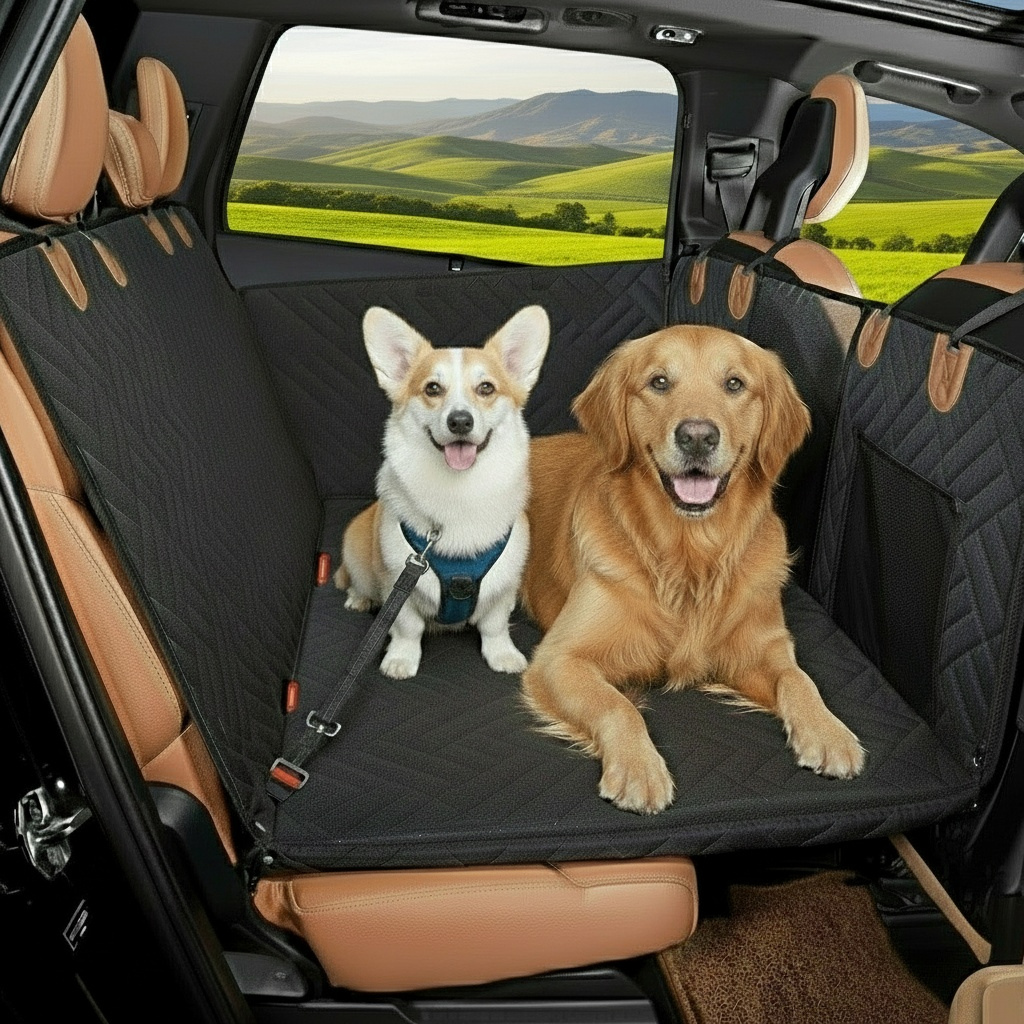
And for everyday life during the transition, many owners also like pairing mobility support with simple comfort protections, like a tear-resistant, waterproof Whisker Bark dog seat cover to help keep car rides and outings cleaner and less stressful.