

Rear Support Vs Full Support Dog Wheelchair: Which Is Safer
Choosing a dog wheelchair is a safety-and-comfort decision, not a “features” decision. Rear support and full support solve different problems, and the safest choice is the one that matches what your dog can power, steer, and tolerate today.
Which One Is Safer?
- Rear support is often the safer starting point when your dog’s front legs can reliably propel and steer, and the main limitation is the hind end.
- Full support is often safer when front-end strength, balance, or steering is also limited, or when your dog cannot hold posture without help.
- Either type requires supervision, a gradual ramp-up, and daily fit checks for rubbing, pinching, and stability.
The Two-Minute Safety Screen You Can Do At Home
This is not diagnostic. It is a practical way to decide whether rear support is likely to be stable enough or whether full support guidance is the safer next step.
Step 1: Propulsion Check
- Test: On a grippy surface, support the hind end with a towel under the belly and let your dog try to walk forward.
- Pass: 10–15 steady front-leg steps with a mostly straight line.
- If not: Front-end weakness or fatigue may make rear-only support unsafe. Consider full support guidance.
Step 2: Steering And Balance Check
- Test: Walk a slow “S” turn around two chairs.
- Pass: Your dog can turn without tipping, crossing the front legs repeatedly, or spiraling.
- If not: Steering instability is a strong reason to involve a professional before choosing.
Step 3: Comfort And Skin Check
- Test: After a short assisted walk, inspect armpits, groin, and any contact areas.
- Stop and reassess if you see: rubbing, redness, pinching, distress, refusal to move, or sudden worsening. Wounds are a commonly reported complication with mobility devices, so early skin checks matter.
For broader veterinary context on mobility challenges and assistive devices, VCA’s overview of pets with disabilities is a helpful starting point: Pets With Disabilities Overview. For rehab-focused homecare concepts, VCA also discusses home exercise planning for paralyzed pets: Homecare For Paralyzed Pets.
What Rear Support And Full Support Actually Mean
Rear Support Wheelchair
A rear support wheelchair lifts and aligns the hind end while your dog uses their front legs to move forward. It tends to feel lighter and simpler for daily routines when the front end is strong and consistent.
Full Support Wheelchair
A full support wheelchair provides assistance across more of the body when mobility needs are broader. It can be a safer path when front-end function, balance, or overall endurance is limited, but it often requires more careful setup and professional input.
Rear Support: When It Is Often The Right Match

Rear support is commonly considered when the front end can do the work and the back end is the primary limiter.
- Front legs can propel consistently for short, supervised sessions.
- Hind legs knuckle, drag, or collapse while the front steps stay confident.
- Your dog can steer without tipping on flat surfaces.
- Supporting the hind end improves alignment and reduces wobble.
If you want a calmer foundation on types, fit, and what to expect day to day, this internal guide pairs well with the decision rules here: dog wheelchair guide for beginners.
Full Support: When It May Be Safer
These are non-diagnostic “slow down” flags. They do not name a condition, but they do signal higher risk if you guess wrong.
- Front legs also look weak, unsteady, or unable to propel reliably.
- Your dog cannot steer safely, even on flat ground.
- Your dog tips, panics, or refuses to move when supported.
- Your home layout or caregiver limitations make falls more likely.
Many rehab services emphasize supervised acclimation, short initial sessions, and professional oversight when needs are complex. Example, this specialty rehab service describes mobility carts as part of a rehabilitation plan and offers trial-based evaluation.
Rear Support Vs Full Support In Real Life
| Decision Factor | Rear Support Tends To Fit Better When | Full Support Tends To Fit Better When |
|---|---|---|
| Propulsion | Front legs reliably move the dog forward | Front legs tire quickly or cannot propel consistently |
| Steering | Dog can turn without tipping on flat ground | Dog tips, spirals, or cannot steer safely |
| Routine Complexity | You want simpler daily sessions and lighter handling | You can commit to careful setup and closer oversight |
| Home And Terrain | Open indoor spaces, flat practice areas, controlled surfaces | Tighter spaces or more uneven footing that increases fall risk |
How We Evaluate Durability And Fit In Support Conversations
When someone asks us “rear or full support,” we do not start with features. We start with failure prevention. These are the most common issues we see families struggle with in early use:
- Rubbing and pinching: usually from misalignment, strap tension, or a cart that is not centered.
- Tipping or twisting: often linked to uneven adjustment, uneven terrain too early, or a dog that is not ready for longer sessions.
- Refusal to move: commonly caused by fear, discomfort, or moving too fast in week one.
- “Looks fine, but feels wrong” fit: contact points are technically placed, but posture is not neutral.
Our internal rubric is simple: Alignment (no rubbing, neutral posture), Stability (no tipping, smooth rolling), Comfort (dog chooses to move), Routine (short sessions you can repeat consistently).
Works Even If You Do Not Buy Ours
You can reduce risk and improve comfort with these habits no matter which cart you choose:
- Start indoors on traction: yoga mats or runners reduce slipping and panic.
- Use a towel sling in week one: it helps guide alignment while your dog learns the motion.
- Retension check: re-check strap tension after the first 2–3 minutes because webbing can settle.
- Skin scan every session: armpits, groin, and any contact points before and after.
- Short sessions first: many rehab sources recommend beginning with brief, supervised sessions and building duration only when the dog is comfortable and stable.
First Week Ramp Up
A conservative ramp-up prevents the most common early failures: rubbing, fatigue, and fear. Many dogs do best when you keep sessions short at the start and increase gradually with supervision.
- Days 1–2: 3–5 minutes, 1–2 times per day, on flat traction indoors.
- Days 3–4: 5–8 minutes, add gentle turns, still indoors.
- Days 5–7: 8–12 minutes, introduce one new surface (smooth sidewalk) if stability is solid.
If you see rubbing, distress, tipping, refusal to move, sudden mobility changes, or pain escalation, stop and reassess fit and session length. Wounds and skin issues are among the most commonly reported complications with carts, so small problems are worth addressing early.
One Real Example Pattern
This is a composite example based on common fit and onboarding issues we see (not a single dog and not a guarantee of outcomes). It is included because it is falsifiable: you can watch for the same signals.
- Setup: medium dog, hind-end weakness, strong front legs, hardwood floors at home.
- What failed first: dog refused to move and twisted slightly after 2 minutes indoors.
- What we changed: moved to traction (runner), shortened to 3-minute sessions, re-centered the cart, re-tensioned straps after minute 2, and paused outdoor terrain for the first week.
- What improved: dog began taking voluntary steps indoors, with fewer twists and no rubbing on daily skin checks.
Can You Switch From Rear Support To Full Support Later?
Yes. Needs can change over time. Switching later is not a failure, and it is often safer than forcing longer sessions when your dog is showing stress or instability.
Final Thoughts
The safest choice is the one that keeps your dog aligned, avoids rubbing, stays stable, and matches what your dog can power and steer today. Rear support often works well when the front end is strong and consistent. Full support can be the safer path when balance and front-end function are also limited.
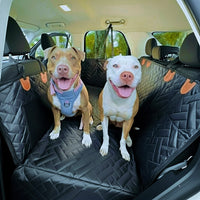
If you want a rear-support option built for fit tuning and real routines, the product referenced in this guide is the Whisker Bark Dog Wheelchair. For families who also protect the car during vet visits and rehab outings, the Whisker Bark dog seat cover with a waterproof build is a common add-on for cleanup control and interior protection.
Share