

Hard-Bottom Vs Hammock Dog Seat Covers For Big Dogs
Most dog seat covers on the market are hammock style for a reason. They are lightweight, quick to install, and they help block access to the footwell while protecting seat backs.
But once you are dealing with a large dog (about 60+ pounds), two dogs sharing the back seat, or a wide bench common in SUVs and minivans, the priorities shift. The main question becomes simple: will the platform stay stable when your dogs jump in, reposition, and brace during normal driving?
If your current cover feels like a moving floor, your dog braces during turns, or you keep re-tightening straps, the problem usually is not “hammock vs hard bottom” in the abstract. It is a specific failure point (strap creep, anchor angle, center span stretch, or bench geometry) that causes dip and drift over time.
This guide breaks down when hammock covers work well, when sag tends to show up, and quick checks you can do in your own car before buying. If you already know you want a structured option designed to stay flatter under heavier riders, start here: hard bottom dog seat cover for big dogs.
Quick Decision Rule
- Choose a hammock style cover if you have one small to medium dog, mostly short trips, and you care most about fast install and lightweight storage.
- Choose a hard bottom cover if your dog is large (about 60+ pounds), you have two dogs, your back seat is wide, or you notice bracing or scrambling during turns and braking.
Which Style Fits Your Dogs? Quick Selector
| Your Situation | Hammock Style Often Fits | Hard Bottom Often Fits |
|---|---|---|
| One Small Or Medium Dog | Yes, especially for short trips | Yes, if you want a flatter platform |
| Large Dog Or Strong Jumper | Sometimes, but dip increases on wide seats | Often, because structure carries the load |
| Two Dogs Sharing The Back Seat | Possible, but uneven loading can increase drift | Often, because the platform stays more stable |
| Frequent Travel Or Long Drives | Works if it stays tight and predictable | Often, because it resists sag and strain |
Test Results At A Glance


Testing setup: We installed a Generic hammock-style cover and a Whisker Bark hard bottom cover in two vehicles (a Ford Bronco and a Toyota Sienna) using the same dog and the same driving loop with stop and go traffic, turns, and normal braking.
How we measured center dip: We laid a straight reference line across the left and right seat edges (edge to edge) and measured down to the lowest point in the middle of the platform using a tape measure. We checked dip after normal driving and after the dog jumped in and repositioned.
How we measured side drift: We marked the platform edge position at the start of the drive and checked how far it moved left or right after repositioning and normal driving.
Important context: This is in-house testing with one dog and two vehicles. Results can vary based on bench width, headrest geometry, strap material, strap tension, and how a cover anchors to the seat.
Results Snapshot
| Check | Hammock Style | Hard Bottom |
|---|---|---|
| Center Dip After Normal Driving | About 2.5 inches | About 0.75 inches |
| Side To Side Platform Shift | About 2 inches (roughly 1–3 inches) | Under 1 inch (minimal) |
| Retension Needed During Use | Yes, about 1–2 times | Rarely or not needed |
| Dog Comfort Notes | More bracing and repositioning | Settled faster with steadier footing |
What this looked like in practice: with the hammock setup, the center span loosened more after jumping and repositioning, and the platform moved around more during stop and go driving. With the hard bottom setup, the platform stayed flatter with less dip and less side drift, which helped our dog settle faster between turns, braking, and repositioning.
Why Hammock Setups Lose Stability On Big Dogs And Wide Benches
Most hammock designs are tension-based, so stability depends on the straps holding tension and the center span resisting stretch. When the load gets heavier or more dynamic, four culprits usually drive dip and drift.
- Strap creep: straps slowly loosen at buckles over time, even if they felt tight at install.
- Anchor angle: if the headrest straps pull downward instead of backward, tension drops faster during movement.
- Long center span: wide benches create more unsupported distance, so the middle area takes the most stress.
- Fabric stretch: the center section can stretch under repeated jumping, braking, and repositioning.
If You Notice This, Try This:
| What You See | Most Likely Culprit | What To Try First |
|---|---|---|
| Dip grows after a few drives | Strap creep or fabric stretch | Re-tighten straps, then re-check dip after driving |
| Platform slides left or right when dog swaps sides | Uneven anchors or long span on a wide bench | Check seat anchors and strap symmetry on both sides |
| Dog braces during turns and braking | Micro-movement plus unstable footing | Do the press test and edge check before longer trips |
Quick Stability Checks You Can Do In Your Own Car
Before you commit to a long drive, these checks help you predict whether a cover will stay stable under real movement.
- Press Test: press down firmly in the center where your dog stands. If it dips easily and stays low, the floor is relying mostly on tension.
- Edge Check: press near the left and right edges. If the sides droop toward the footwell, dogs can drift toward the gap when the vehicle moves.
- Reposition Check: tug the platform slightly left and right. If it slides and recenters, two dogs swapping sides can pull the floor around.
Why Hard Bottom Covers Feel More Stable
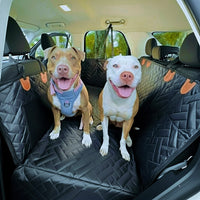
A hard bottom seat cover uses structure to carry load. Instead of relying on fabric tension to create the floor, a rigid or semi rigid base distributes weight across the bench, reducing the center span dip and reducing drift during repositioning.
- A structured base designed to stay flatter under weight
- More even load transfer into the seat, not just into headrest straps
- Reduced fabric strain because the base does more of the work
- Less movement under paws, which can help dogs settle
If you want a deeper stability-focused breakdown, read how a stable dog seat cover for big dogs is engineered.
Real World Scenarios That Make The Choice Obvious
Two Medium Dogs Who Swap Sides Often
If your dogs switch sides or climb over each other, a platform that drifts can make both dogs adjust every time one moves. A more stable platform reduces that chain reaction so each dog can settle faster.
One Large Dog Who Launches Into The Seat
For dogs that jump in with force, impact is the stress test. If the platform feels bouncy after a few jumps, your dog often braces more because footing never feels consistent.
A Wide Bench SUV Or Minivan Back Seat
Wide benches create a longer center span. When that span relies on tension alone, the middle area often shows a dip sooner, especially with frequent commuting and longer drives.
Cleaning, Longevity, And Long Term Value
Cleaning is often where owners notice the hidden cost of dip. When a cover bunches, it traps hair, grit, and moisture in folds and seams, which can increase abrasion and make it harder to reset the surface quickly after each ride.
A structured base can reduce strain on the fabric because it carries more of the load. Over time, that can translate to a longer usable life, even if the upfront price is higher.
For realistic cleaning routines and end-of-life signs, these guides help:
Final Thoughts
A hammock style cover is a strong choice for simpler use cases. It is quick, lightweight, and convenient, especially for one calm rider and shorter drives.
For large dogs, two dog households, and wide bench vehicles, structure usually wins because the platform stays more predictable under paws. If you want a waterproof option designed to reduce sag and support a more secure ride, the Whisker Bark hard bottom dog seat cover is built around a hard-bottom platform for heavier riders and multi-dog households.
Share