

How a Stable Dog Seat Cover For Big Dogs is Engineered
Big dogs are a different game in the car. At 80, 100, or 140 pounds, they load a backseat harder, shift more, and expose weak “hammock” spans faster than lighter riders. When the riding surface dips or creeps, dogs brace, slide toward the middle, and keep rebalancing instead of settling.
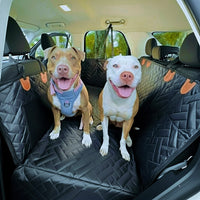
If you already know you want a structured platform style, you can check the Whisker Bark Hard Bottom Dog Seat Cover.
The Real Stability Problem For Big Dogs
Large dogs do not ride like small dogs. They stand to look out the window, pivot to resettle, and brace when the car turns or slows down. That motion creates a few predictable failure modes:
- Center-span dip: a soft span between anchors can form a pocket that pulls dogs inward.
- Strap creep: tension-based systems can loosen over time, increasing movement under paws.
- Footwell edge drop: when edges slump, dogs slide toward gaps and start bracing.
- Confidence loss: when the floor shifts, many dogs keep adjusting instead of relaxing.
Safety And Vehicle Constraints
Any cover you use should preserve clean access to seatbelt buckles and child-seat hardware. If you cannot latch and unlatch easily every time, change the setup. NHTSA provides public guidance on seat belt use and car seat installation basics, and your vehicle manual is still the final authority for anchor locations and routing.
For dog restraint options and general best practices, AVMA’s guidance on pets in vehicles is a useful starting point. If you want a crash-test-focused list for harnesses, the Center for Pet Safety publishes results for certain products and categories.
What Makes A Seat Cover Feel Stable
For big dogs, stability is mostly about structure and load distribution, not extra quilting. A “planted” ride surface typically comes from:
- Base rigidity: reducing the center-span dip so the dog is not standing on a moving pocket.
- Load spreading: distributing weight across the platform so one paw step does not create a deep sag.
- Secure anchoring: keeping tension consistent so the system does not loosen and drift with normal trips.
- Traction: limiting slide between the cover and the seat, and giving the dog a predictable surface.
Behind The Design The Reinforced Hard Bottom System
A hard-bottom system is built as a stack of parts where each layer has a job. Here is the plain-language breakdown of what each component is intended to do.
Internal Stability Board
- Purpose: reduce center-span dip so the surface stays flatter under standing and repositioning.
- What owners notice: fewer “pocket” moments where the dog drifts toward the middle.
Load-Bearing Strap System With Metal Hardware
- Purpose: help the platform hold tension consistently over repeated tightening and real travel use.
- What owners notice: less frequent retightening when installed with even strap tension.
Anti-Slip Contact Layer
- Purpose: reduce lateral drift on smooth seats.
- What owners notice: less cover migration during turns and braking.
Waterproof And Durability Layers
- Purpose: protect upholstery from wet dogs, grit, and accidents while staying practical to clean.
- What is listed: the product page lists 100% waterproof 600D Oxford Cloth.
Concrete Product Specs Listed On The Product Page
If you want numbers you can verify before buying, start with the listing details:
- Dimensions listed: 54 inches (length), 24.8 inches (width), 22 inches (height).
- Material listed: 100% waterproof 600D Oxford Cloth.
- Support rating listed: “supports dogs up to 400 lbs.”
Important context: a listed support rating describes structural stability under load. It is not a restraint rating and it is not a crash-safety certification.
How We Evaluated Stability In A Repeatable Way
“Stable” only means something when the test conditions are described. In our internal write-up of the 400-pound load test, we used a bench-mounted setup, spread weight across the riding surface (to avoid unrealistic point loading), and increased load in steps from 100 to 400 pounds. At each stage, we observed time-under-load sag and visually inspected straps, anchors, edges, and base behavior.
| Stage | Load | What We Checked |
|---|---|---|
| 1 | 100 lbs | Initial sag, strap tension change, anchor settling |
| 2 | 200 lbs | Base flex vs fabric stretch, edge stability |
| 3 | 300 lbs | Strap elongation, anchor stress points, footwell behavior |
| 4 | 400 lbs | Time-under-load sag, visible deformation, post-test recovery |
What We Tracked During Load Checks
Rather than “it held,” we focused on observable markers owners can recognize at home:
- Sag depth over time: whether the surface dip increased the longer weight stayed on it.
- Strap elongation: whether straps appeared to keep stretching as load increased.
- Anchor stress points: where tension concentrated around headrest and attachment points.
- Base behavior vs fabric behavior: whether the structure carried load or the fabric became the structure.
- Edge collapse near the footwell: whether edges drooped and created a slide toward gaps.
Limitations And What Could Change Results
A controlled load check is a foundation test, not a guarantee. Real dogs create uneven loading through jumping, pacing, and bracing. Results can change based on:
- Seat geometry: deep footwells and pronounced bolsters can increase edge drop and drift.
- Strap angle: a steep downward pull often increases forward creep over time.
- Seat surface: slick leather can amplify slide unless the underside grips well.
- Two-dog riding: independent movement can create a “domino” shift that stresses anchors.
Soft Bottom Vs Hard Bottom Tradeoffs
Soft and hard-bottom covers are not “good vs bad.” They optimize for different outcomes. Here is the practical tradeoff view.
| Aspect | Soft Bottom Covers | Hard Bottom Covers |
|---|---|---|
| Setup And Storage | Often lighter and easier to fold small | Often bulkier due to structure |
| Center Span Under Heavy Riders | More likely to develop a dip on wide benches over time | More likely to stay flatter when structure carries load |
| Feel During Turns And Braking | Can feel “swingy” if the surface moves under paws | Can feel more predictable when anchored correctly |
| Best Fit Case | One calm small to medium dog, short trips, simple coverage | Large breeds, frequent standing, two-dog use, wider benches |
What Skeptical Shoppers Should Ask Any Brand
If a product claims “no sag” or “high load support,” ask for specifics that separate engineering from adjectives:
- Test conditions: bench vs real vehicle, evenly distributed vs point loads, and staged loading vs a single number.
- What was measured: sag depth over time, strap creep, anchor stress points, edge drop near the footwell.
- Clear limitations: what seat shapes or installs make performance worse.
- Safety boundaries: an explicit statement that stability testing is not crash testing.
Final Thoughts
For big dogs, “comfort” often starts with footing that stays consistent. When the surface dips, shifts, or creeps, dogs brace and keep adjusting. A structured base is one way to reduce that movement, especially on wide benches or in two-dog households.
If you want a stability-first option, the Whisker Bark dog seat cover with a rotating hard-bottom platform, waterproof build, and tear-resistant 600D Oxford cloth is designed to reduce sag and keep the riding surface more predictable for heavy riders. See full specs and fit details here: Whisker Bark Hard Bottom Dog Seat Cover.
Share