

Best Materials for Heavy Duty Dog Seat Covers in 2026
“Heavy duty” is one of the most abused phrases in dog seat covers. If you have a big dog, two dogs, sharp nails, or muddy weekly adventures, you do not need hype. You need a cover that resists abrasion, stays waterproof after real use, and does not fail at the seams, anchors, or hardware.
Whisker Bark sells dog seat covers, and we recommend our own when it fits. This guide focuses on materials and construction details you can verify across any brand, not vague marketing labels. If you already know you want a structured option designed for heavier riders, start here: hard bottom dog seat cover.
Quick Reality Check: Most “heavy duty” failures are not the fabric ripping in half. They are slow failures: coating breakdown, seam creep, buckle slip, backing wear, and sag that turns into bunching and abrasion hotspots.
What Heavy Duty Actually Means For Seat Cover Materials
Most covers fail in the same few ways. The shell scuffs and pills, the waterproof layer cracks or peels, stitching pops at stress points, buckles slip, or the “non slip” backing wears smooth and the cover starts drifting.
| Failure You See | Real Culprit | Build Detail That Prevents It |
|---|---|---|
| Top layer fuzzing, snags, claw scuffs | Low abrasion resistance, loose weave, weak face coating | Tighter weave, higher fabric weight, abrasion testing, reinforced wear zones |
| Water soaks through or leaks at corners | Thin coating, pinholes, seam leak paths, wicking through stitch lines | Continuous waterproof film plus seam layout that blocks wicking at corners |
| Stitching opens, binding tears, anchors rip | Underbuilt thread, low stitch density, no reinforcement at load points | Box stitching or bar tacks at anchors, durable binding, reinforced corners |
| Cover drifts, sags, bunches | Stretchy span, strap creep, backing wear, unstable platform | Low stretch webbing, buckle slip control, grippy backing, stable base |
Stop Shopping By Denier Alone
Denier matters, but it is not a shortcut to durability. Two “900D” fabrics can perform very differently depending on weave density, coating, fabric weight, and how the seams are built. If a listing only shows denier, you are missing the information that predicts real wear.
| Shell Fabric Claim | What It Tells You | What You Still Need |
|---|---|---|
| 600D Oxford | Common baseline, can be durable if built well | Fabric weight, abrasion performance, seam reinforcement, backing quality |
| 900D Oxford | Often thicker yarn, can resist scuffs better | Weave density, coating or laminate type, anchors, hardware slip control |
| 1680D Polyester | Often used in luggage-style fabrics, can be very tough | Waterproof layer quality, edge binding strength, noise and stiffness tradeoffs |
The Waterproof Layer Matters More Than The Shell
Many covers look tough on top but fail underneath. If the waterproof layer is a thin coating that cracks, peels, or pinholes, mud and drool end up in your seats even if the outer fabric still looks fine.
Common Waterproof Constructions
- PU coating: common and flexible when applied thick enough and protected from abrasion.
- TPU film laminate: often more resistant to cracking than thin coatings when paired with a durable face fabric.
- PVC layer: can be highly waterproof but may feel stiffer and can crack over time depending on formulation and use.
If you want a credible definition of waterproof performance, look for brands that reference a hydrostatic pressure test method such as ISO 811.
Seams And Hardware Are The True Weak Links
Most failures do not happen in the middle of the fabric. They happen where stress concentrates: strap anchors, corners, binding edges, and stitch lines. If a listing does not show close-ups of these zones, you are guessing.
- Thread and stitch density: durable thread plus consistent stitch density reduces seam creep under repeated loading.
- Reinforcement: bar tacks or boxed stitching at anchors matter more than fancy fabric names.
- Webbing and buckles: low-stretch webbing helps prevent strap creep, and higher quality buckles reduce slip under load.
If a brand claims “heavy duty,” the strongest signal is when they reference recognized test methods for fabric and seam performance, such as:
- ISO 13934-1 tensile properties of fabrics
- ASTM D5034 grab breaking strength of textile fabrics
- ASTM D1683 seam failure in sewn seams
Abrasion Resistance Is The Nail Test That Actually Predicts Wear
If your dog digs, turns in circles, or launches into the back seat, abrasion is the daily reality. A credible “heavy duty” claim includes abrasion thinking, not only denier.
One widely used lab method for abrasion resistance is the Martindale test. If a brand references ISO 12947-2, that is a strong signal they are thinking in measurable durability terms: ISO 12947-2 abrasion resistance standard page.
How To Verify A Heavy Duty Claim In Ninety Seconds
You do not need a lab to spot weak construction. You need the right questions and the right photos. If a listing does not show these proof points, you are buying based on adjectives.
| Proof Point | What You Want To See | Why It Matters |
|---|---|---|
| Anchor Reinforcement | Close-up of anchor stitching, box stitch or bar tacks, not just a wide shot | Anchors see the highest stress under jumping and braking |
| Corner And Binding Build | Corner construction, binding thickness, edge stitching clarity | Corners and edges fail first when water and abrasion concentrate |
| Waterproof Strategy | Mentions a laminate or film, plus how seams resist wicking | Most “waterproof” claims fail at stitch lines and corners |
| Anti-Slip Proof | Clear underside photo and how it stays grippy after washing | Backing wear causes drift, bunching, and abrasion hotspots |
A Simple Three Test Protocol You Can Run At Home
If you want proof beyond product photos, you can run quick checks that mimic real failure modes. These are not lab tests, but they reveal weak coatings, weak seams, and strap slip fast.
Test One: Waterproof Corner Check
Place a dry paper towel under a corner seam area, pour a small cup of water on top, and wait five minutes. If the towel shows dampness or wicking along stitch lines, the waterproof strategy is weak where it matters most.
Test Two: Abrasion Hotspot Check
Rub the same spot with a damp microfiber cloth using firm pressure for two minutes. If you see immediate fuzzing, coating transfer, or surface breakdown, abrasion resistance is likely underbuilt for nail-heavy use.
Test Three: Strap Creep Check
Install the cover tight, mark strap position with a piece of tape, drive normally for a few days, and re-check. If straps slip noticeably or the platform drifts, hardware slip and webbing stretch will compound over time.
Pro tip: When a cover fails, it usually fails gradually. A small seam leak becomes a soaked seat. A little drift becomes bunching. Bunching becomes abrasion and popped stitches. The goal is to catch weak points early, before your car interior pays for it.
Hard Bottom Inserts Are The Material That Changes The Failure Pattern
For heavier riders, the most important “material” is often not the shell fabric. It is whether the platform stays flat. A hard bottom or structured base reduces center dip and bunching, which reduces abrasion hotspots and seam stress over time.
When covers sag, dogs brace more, and bracing increases claw scuffs and sliding. A stable platform reduces movement, which reduces wear in the places that fail first.
What To Ask A Brand Before You Buy
Most listings will not hand you a lab report, but you can still separate real build quality from marketing. Ask for at least one verifiable proof point in each category below.
| Category | What To Ask For | Red Flag Answer |
|---|---|---|
| Waterproofing | Hydrostatic pressure method or rating, plus how seams resist wicking | “Waterproof coating” with no method, no seam strategy |
| Abrasion | Abrasion test reference or cycles, or at least a clear wear demonstration | Only a denier, no evidence |
| Seams And Hardware | Reinforcement at anchors, buckle slip prevention, webbing stretch control | No close-up photos of anchors, corners, buckles |
| Platform Stability | Hard bottom or structure, anti-slip strategy, drift control plan | “Non slip backing” with no underside photo or explanation |
Final Thoughts
The best materials for a heavy duty dog seat cover are not just “600D vs 900D.” What matters is the full stack: abrasion-resistant shell, a real waterproof layer, reinforced seams, stable webbing and hardware, and a platform that stays flat under real movement.
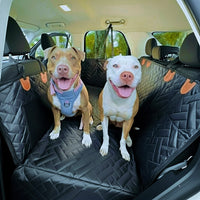
If you want a waterproof option built around stability for heavier riders and multi dog use, the Whisker Bark hard bottom dog seat cover is designed to reduce sag and bunching so wear stays lower and footing stays more predictable.
Share