

Best Dog Seat Covers For Jeep Wrangler Owners
If you drive a Jeep Wrangler and your dog rides in the back, the “best” seat cover usually comes down to two things: fit and stability. Wranglers see more dust, wet gear, and bumpy roads than most daily drivers, so a cover that slides, sags, or soaks through becomes a weekly annoyance fast.
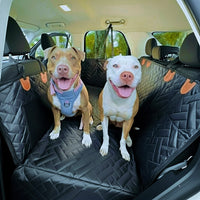
If you want a structured option with a hard bottom panel and wipe-down cleanup, here is our cover: Whisker Bark Dog Seat Cover With Hard Bottom.
Why Wranglers Are Hard On Dog Seat Covers
Wranglers are built for open-air and adventure use, which is part of their appeal and why interior protection matters more than usual.
- More grit: trail dust and sand work into fabric and seams and can speed up wear.
- More moisture: wet dogs and rainy days test whether a cover truly contains spills and damp fur.
- More movement: uneven roads can make soft hammocks sway and pull toward the middle.
- More door contact: excited dogs often brace against doors during entry, exits, turns, and braking.
Measure First: The Wrangler Fit Checks That Prevent Returns
Most “universal fit” covers fail because the usable surface does not match your real back seat. Take three quick measurements and you will know what can actually lay flat.
- Usable bench width: measure left-to-right across the seat cushion where paws will land.
- Usable bench depth: measure from the seatback crease to the front edge of the cushion.
- Headrest strap path: confirm the straps can run straight to the rear headrests without rubbing sharp corners or pulling at an angle.
If you want a quick reference point before you grab a tape measure, a JL Wrangler forum post recorded an approximate rear bench width of about 49 inches and depth of about 16.24 inches on a reveal vehicle. Use that as a rough sanity check only. Actual measurements vary by trim and seat design.
JK Vs JL Model Years: The 2018 Trap
Many owners get tripped up by 2018 because the outgoing Wrangler JK was sold alongside the new JL generation. If you shop by model year alone, you can end up buying a cover that fits differently than expected. If you are unsure which Wrangler you have, a quick visual guide is often faster than guessing.
Choose Your Cover Type Based On How Your Dog Rides
Instead of “best cover,” choose the format that matches what your dog actually does in the back seat.
- Soft hammock: best when you have a small-to-medium dog that mostly lies down and you value lightweight storage and quick installs.
- Bench cover: best when your dog stays on the seat and you want a simpler layout, especially if you do not need a full hammock wall between rows.
- Structured or hard bottom style: best when your dog stands, braces, or shifts a lot on bumpy roads, and you want a flatter platform to reduce center sag and sliding.
How To Pressure-Test “Waterproof” Claims Without Lab Gear
Many products say “waterproof,” but not all brands publish a waterproof rating. In outdoor gear, one common way to quantify waterproofness is hydrostatic head testing, which measures how much water pressure a fabric can resist before it leaks.
If a pet cover does not publish a rating, you can still do a practical at-home check that targets the real weak points: seams and stitched edges.
- Five-minute seam check: pour a small amount of water onto the surface, wait 5 minutes, then wipe and inspect underneath at seams and corners.
- Edge fold check: lift the cover slightly and inspect folds where water can pool. That is where dampness lingers after wet-dog rides.
- Repeat after washing: many coatings weaken over time. Re-check after a few wash cycles.
How To Spot Slip And Sag Before Your First Trail Day
Two issues cause most Wrangler complaints: a cover that slides on the seat, and a cover that forms a center pocket that pulls your dog inward.
- Slip test: with the cover installed, press down with both hands and push forward and sideways. If it “walks” easily, expect more shifting on turns and braking.
- Center sag test: place a straight object across the left and right seat edges and measure down to the lowest point in the middle with a tape measure. More dip usually means more repositioning on bumpy roads.
- Strap creep test: tighten everything, drive for a week, then re-check strap length and anchor position. If straps loosen quickly, the fit usually degrades over time.
What We Can Prove With In-House Testing
When we make a strength or stability claim, we try to publish the setup, the timeline, the measurements, and the limits. Our in-house load test on our hard bottom cover used four load stages from 100 to 400 pounds, held 10 minutes per stage, and recorded center sag depth, sag growth over time, front edge drop, strap elongation, and recovery after unloading. The results table and limitations are published in full, including the note that this is not a crash safety claim and that results vary by seat geometry and install tension.
Dog Travel Safety Basics
A seat cover protects your interior. It does not protect your dog in a sudden stop. For travel safety, general veterinary guidance recommends securing pets so they are not loose in the cabin, and the Center for Pet Safety highlights independently tested options for restraints.
- Use a travel harness or secured carrier: choose a setup that prevents roaming and reduces distraction.
- Prefer tested gear where possible: CPS maintains a list of crash test certified harnesses.
- Ramp up gradually: short rides in week one help you spot rubbing, slipping, or refusal to settle before a long trip.
- Stop and reassess if you see: rubbing, distress, tipping, refusal to move, sudden mobility changes, or pain escalation.
Common Wrangler Setup Mistakes
- Buying before measuring: “universal” only works if your usable bench width and depth match the platform.
- Over-tightening straps: it can warp fit and pull the cover off-center. Tighten for stability, then re-check after the first drive.
- Ignoring entry and exit: most claw marks happen during jump-ins and jump-outs. Door protection helps, but guiding slower entry helps more.
- Letting grit sit: vacuuming after trail days reduces slow abrasion on seams and top fabric.
Final Thoughts Build Your Jeep For Adventure
If you want a true “best” choice for your Wrangler, do not start with marketing words. Start with measurements, a slip test, and a seam check. Those three steps reveal most of what matters for real-world comfort and cleanup.
If you want a structured option that publishes concrete specs, our Whisker Bark dog seat cover uses a hard bottom panel, 600D Oxford cloth described as 100% waterproof, and a 54 x 24.8 x 22 inch size in the product FAQ, along with a stated 400-pound support claim and a clear note that crash protection comes from using a proper travel harness.
One last note for Wrangler owners: if you also want to protect your upholstery outside the vehicle, the Whisker Bark dog seat cover pairs well with a Whisker Bark dog seat cover approach to “mess containment” across your routine, and our Whisker Bark dog seat cover materials and care guidance can help you keep the back seat looking like a Jeep, not a kennel.
Share