

Ford F-150 Dog Seat Cover Guide: Best Fit, Durability and Protection
The Ford F-150 is built for job sites, weekend projects, and long drives with a dog in the back. It also has a rear-seat layout that breaks a lot of “universal” dog seat covers: a wide bench, a deep footwell drop, and tall headrests that can create steep strap angles if the cover is not designed for truck geometry.
If you are shopping for a Ford F 150 dog seat cover, the fastest way to avoid returns is to treat fit as a measurement and geometry problem, not a trim-name problem. This guide explains what makes the F-150 back seat tricky, how hammock covers typically fail in trucks, and what to check before you buy.
Safety And Vehicle Constraints
A seat cover must not block seatbelt latching, belt routing, or child-seat anchors in any seating position you plan to use. If you cannot buckle cleanly every time, change the setup. For broader travel safety habits, the AKC and ASPCA commonly recommend restraining dogs during rides. A cover protects upholstery and can improve footing, but it is not a crash-tested restraint.
Why F-150 Back Seats Break Standard Covers
The F-150 rear bench exposes three mechanical weak points in many soft hammock designs:
- Wide-span sag: the wider the bench, the easier it is for a tension-only “fabric bridge” to dip in the middle under a standing dog.
- Deep footwell collapse: trucks often have a bigger drop from bench to floor, so soft spans behave like a hammock and sink toward the gap.
- Strap-angle creep: tall headrests and a high bench can create a downward strap pull that slowly walks the cover forward during braking.
Measure First A Simple F-150 Fit Checklist
If a page claims “fits every trim” without telling you what to measure, it is asking you to guess. Use these checks to pick a size and style with less risk.
- Usable bench width: measure crease-to-crease where the seat bottom meets the door-side bolsters.
- Seat depth: measure from the front edge of the bench to the seat crease.
- Backrest strap wrap zone: measure from seat crease up to the point where straps will wrap around the headrest posts or base.
- Buckle locations: note where buckles sit left-to-right and whether they are recessed.
- Split seat needs: if you use a 60/40 fold regularly, confirm whether you need partial access.
What F-150 Owners Should Look For In A Dog Seat Cover
Instead of a long feature list, focus on the few attributes that actually prevent the common truck failures.
- Structure that reduces center dip: a base that stays flatter is the most direct fix for wide-bench sag.
- Stable anchoring and even tension: strap routing that resists forward creep during braking.
- Grippy underside: helpful on leather, but only when the cover is installed tight and anchors are seated deep.
- Durable outer fabric: a heavy-duty fabric matters most at high-wear zones (front edge, seat crease, door-side flaps).
- Clean buckle access: if you cannot latch fast every time, the setup is wrong for your vehicle.
Why Soft Hammock Covers Often Fail In Trucks
Soft hammock covers can work in many vehicles, but trucks tend to amplify their weak points. Here is the “why,” in plain terms:
- They rely on tension: the surface is held up by straps and fabric tension, not by a rigid span.
- Tension changes with use: after dogs jump in, shift, and brace, straps can loosen and the hammock sags more.
- Wide benches stretch the span: the longer the span, the more dip you feel in the middle.
- Deep footwells create a low spot: once the cover starts dipping, it tends to keep dipping into the same pocket.
Truck-Specific Problems And The First Fix To Try
| Problem You See In An F-150 | Most Likely Culprit | First Fix |
|---|---|---|
| Dog Slides Toward The Center | Center-span sag into the seat gap or footwell | Tighten evenly, seat anchors deeper, reduce slack. If sag persists, switch to a structured base style. |
| Cover Creeps Forward After Braking | Downward strap angle and uneven tension | Re-route for a more backward pull where possible, retighten evenly, and recheck after two trips. |
| Slides On Leather | Loose fit plus slick surface plus shallow anchors | Vacuum grit, seat anchors deep, add a grip layer if needed. If it still drifts, change style. |
| Buckles Become Hard To Reach | Slot mismatch or drifting cover | Align openings, verify two-finger access, then recheck after two normal trips. |
What We Can And Can Not Claim About Strength
You will see “support” and “load” claims in this category. Here is the right way to read them:
- Support ratings: describe stability under weight, not crash safety.
- Real-world load varies: a dog that braces and launches creates more stress than a dog that lies down quickly.
- Vehicle geometry matters: strap angle and bench width can change how the same cover behaves.
When a product page lists a support rating such as “up to 400 pounds,” treat it as a manufacturer claim about structural stability. If you want restraint safety, follow travel restraint guidance and use an appropriate harness or crate setup.
Why The Whisker Bark Hard Bottom Cover Is A Common F-150 Match
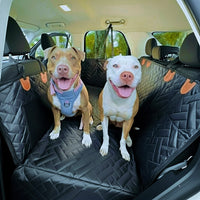
Many F-150 owners prefer a structured platform style because it directly addresses the two biggest truck issues: wide-span sag and deep footwell dip. The Whisker Bark cover is designed as a hard-bottom bench-style base with door-side flaps and seatbelt openings for family travel.
If you want to check current dimensions and materials before ordering, use the product listing: Whisker Bark Hard Bottom Dog Seat Cover.
Best F-150 Dog Travel Setups
Work Truck Setup
If your dog hops in and out often, prioritize fast cleaning and stable footing. A structured base can reduce the “pocket” effect that makes dogs scramble in the first minute of a ride.
Adventure Truck Setup
For mud, water, and trail grit, your first defense is routine: shake out debris, wipe down the surface, and avoid leaving sand trapped under the cover on leather.
Family Truck Setup
If you combine dogs, kids, and gear, buckle access matters more than marketing language. Choose a setup that lets you latch quickly without digging under fabric.
Final Thoughts
The F-150 is harder on seat covers because the bench is wider, the footwell drop is deeper, and strap angles can encourage creep. If you measure your usable width and depth, verify buckle access, and choose a style that matches your dog’s riding behavior, you will avoid most “it didn’t work in my truck” outcomes.
For a stability-first option, many owners choose the Whisker Bark dog seat cover with a rotating attribute focus of hard bottom support and a waterproof, tear-resistant exterior intended for daily truck use. You can review details here: Whisker Bark Hard Bottom Dog Seat Cover.
For more vehicle-fit guidance, see: best dog seat cover for trucks and suvs and how to keep your car clean as a dog owner.
Share