

Hip Dysplasia Symptoms In Dogs: Early Signs And Progression
Your dog is slower to rise, hesitates to jump into the car, “warms up” after a few minutes, or cuts walks short. Those are the real-life behaviors that make owners wonder, “Is this normal aging, soreness, or something that could get worse?”
In many cases, hip-related mobility changes come from a mix of discomfort (protective movement), gait compensation (shorter rear stride to avoid hip extension), and fatigue from less efficient movement patterns. If your veterinarian recommends mobility support for rear-end assistance, dog wheelchairs are one option that may be appropriate in certain cases with careful fit and close supervision.
If you are new to mobility aids and safe setup, start here: dog wheelchair guide for beginners.
Are These Signs Worth Documenting And Discussing With Your Vet
- The same mobility changes show up repeatedly, not just after one unusual day.
- Your dog avoids stairs, jumping, or longer walks more often than before.
- You notice new gait changes, slipping, or frequent rest breaks.
- Your dog seems less comfortable on smooth floors or during turns.
- You feel unsure whether walks are helping or making things worse.
What Counts As A Symptom And What Does Not
For this guide, “symptoms” means repeatable, observable patterns in movement or behavior. Symptoms are not proof of a diagnosis. Many issues can look similar, and hip dysplasia is confirmed through a veterinary exam and, when appropriate, imaging. The American College of Veterinary Surgeons and VCA both describe how clinical signs can range from subtle to obvious and do not look identical in every dog.
The Signs Owners Notice Most Often
These are common owner-observed patterns that veterinary education resources associate with hip disease, including hip dysplasia and osteoarthritis. The point is not to label the cause at home, but to recognize what is worth documenting.
- Warm-up stiffness: stiff after rest, then moves a bit easier after a few minutes.
- Reluctance with loading moves: hesitates to jump into the car or onto furniture, avoids stairs, or takes them slowly.
- Stride changes: shorter rear stride, slower sit or lie-down transitions, or an extra moment before standing.
- Gait changes: lameness, rear-end sway, or a bunny-hopping gait in some dogs.
These patterns are commonly listed in owner-facing references like Merck Veterinary Manual and VCA’s hip dysplasia guide.
Bunny Hopping Explained
Bunny hopping looks like the rear legs moving together instead of alternating normally, especially during running or stairs. It can be a way to reduce hip motion or stabilize movement when the hips feel less comfortable. It is also not specific to hip dysplasia and can occur with other orthopedic or neurologic issues, which is why it is best treated as “worth checking,” not a diagnosis. Merck Veterinary Manual includes bunny hopping as a possible sign while noting that signs vary widely.
Changes In Muscle And Posture You Can Spot
You do not need special tools to notice compensation. Look for slow changes that repeat across days.
- Hind end looks less filled out: back legs or hips look smaller over time compared to the front.
- Weight shifts forward: your dog relies more on shoulders and front legs.
- Stance changes: narrower rear stance, tucked pelvis, or avoiding full hip extension when standing.
Why this matters: when pain limits normal movement, activity often drops, and muscle support can decline. That can change stability and endurance over time. AAHA Pain Management Guidelines emphasize recognizing pain-related behavior changes and tracking patterns at home so your veterinary team can make better decisions.
What Getting Worse Often Looks Like
Progression is individual, but owners often describe “more frequent” and “less recoverable” versions of the same patterns:
- Good days and bad days become more uneven, with fewer easy days.
- Walk tolerance shortens, and the end-of-walk gait looks worse sooner.
- Slipping on smooth floors becomes a repeat problem, especially on turns.
- Rising and transitions (sit to stand, stand to lie down) become slower and more guarded.
Hip dysplasia is often discussed as hip laxity and abnormal loading that can contribute to degenerative changes over time, but clinical signs still vary dog to dog. ACVS explains this variability and the role of joint mechanics.
How Vets Confirm Hip Dysplasia
A veterinary exam plus imaging is how hip dysplasia is confirmed and staged. At home, you can identify patterns, but you cannot confirm hip laxity or arthritis severity without a clinical workup.
Imaging Terms You May Hear
- Hip radiographs: x-rays used to evaluate joint shape and arthritic change.
- OFA evaluations: a radiographic screening program used for hip assessment and data tracking. OFA’s hip dysplasia page explains the program and purpose.
- PennHIP: a radiographic method designed to quantify hip laxity using a distraction index. This PennHIP overview and the PennHIP manual explain what is measured and how results are interpreted.
A Simple Tracking Plan For Your Vet Visit
This is not a diagnosis. It is a practical way to bring clear, repeatable information to your appointment.
Two Video Method
- Record 10 to 20 seconds walking from the side on a flat, non-slip surface.
- Record 10 to 20 seconds walking from behind on the same surface.
- Repeat at the start of a walk and near the end to show fatigue patterns.
Trigger Checklist
- Stairs and curb steps.
- Getting into or out of the car.
- Sharp turns and narrow doorways.
- Slippery floors and smooth transitions like tile to rugs.
- After naps or long rest periods.
Questions To Ask Your Vet
- What is the most likely cause of the signs we are seeing, and what else is on the rule-out list?
- Do you recommend x-rays now, and if so, what views or method are most useful for my dog?
- What is the safest exercise plan right now, and what should we avoid?
- Would rehab or a consult with a canine rehabilitation professional help us build strength safely?
- What changes would mean “call you sooner” instead of waiting for a recheck?
What Treatment And Management Usually Involves
Hip dysplasia management is typically multi-layered, and your veterinarian chooses options based on age, severity, pain level, and lifestyle. Common categories include weight management, pain control, rehabilitation, controlled exercise planning, and in selected cases surgical options. The COAST international consensus recommendations summarize common osteoarthritis management pillars, and ACVS outlines diagnosis and treatment considerations for hip dysplasia.
When Walking Becomes Unsafe
This is where owners often need permission to stop “pushing through.” Walking is not helpful exercise if your dog cannot keep stable footing or is showing clear distress.
- If your dog is slipping, falling, or cannot maintain footing, end the session and improve traction before trying again.
- If your dog repeatedly refuses to continue, stops abruptly, or looks distressed, end the session and reassess.
- If gait deteriorates quickly during a short outing, shorten outings and ask your vet about safer activity.
- If a sudden pain behavior or sudden mobility change appears, stop and contact your vet.
Where Mobility Support Fits If Your Vet Recommends It
Supportive tools are not a cure, and they do not replace medical management. Many dogs do best starting with the simplest support that solves the immediate problem safely.
- Traction upgrades: runners and non-slip paths reduce slipping that can magnify discomfort and instability.
- Ramps and step solutions: reduce repeated high-load jumping and stair work.
- Harnesses and slings: useful for short bursts of rear-end help for transitions.
In some cases, assistive devices can be part of a broader plan. VCA’s multi-modal pain management guide notes that some pets benefit from assistive devices such as harnesses, slings, and in certain cases wheelchairs.
Mobility Support Mistakes That Cause Rubbing, Tipping, Or Refusal
If your vet recommends supportive gear, most setbacks come from setup and environment, not the dog being “stubborn.” These are common preventable mistakes:
- Introducing a mobility aid on slippery floors where the dog cannot find traction.
- Increasing session length too quickly before the dog is stable.
- Over-tightening straps for safety, which can create rub points or pinching.
- Allowing fast turns before the dog understands the turning radius.
- Skipping post-session skin checks and continuing through irritation.
- Not supervising closely during early use.
If You Notice This, What It Can Suggest, And What To Do Next
| If You Notice This | What It Can Suggest | What To Do Next |
|---|---|---|
| Stiff after rest, then improves with gentle movement | A warm-up pattern often reported with joint discomfort | Video it twice (start and end of walk), note time of day, discuss with your vet |
| Bunny hopping on stairs or during running | A compensation pattern that may reduce hip motion demands | Document when it happens, reduce high-load activity, ask your vet about imaging |
| Hind end looks smaller over time, weight shifts forward | Underuse and compensation that can change muscle balance | Track with monthly photos, ask about rehab and safe strengthening |
| Slipping on smooth floors, worse during turns | Traction and stability problems that magnify mobility challenges | Add non-slip paths, slow turns, reassess movement on high-traction surfaces |
When To Stop And Ask Your Vet
- Sudden or severe mobility change.
- Inability to bear weight, repeated falls, or significant distress.
- Persistent pain behaviors or major behavior change around movement or handling.
Final Thoughts
Hip-related mobility symptoms are best understood as repeatable patterns, not proof of a diagnosis. The most useful next step is documenting what you see and bringing that information to your veterinarian so you can decide whether imaging, rehab, pain management, or other changes are appropriate.
If your vet recommends supportive mobility help, the Whisker Bark dog wheelchair can be part of a supervision-first routine that prioritizes traction, fit checks, and controlled outings on predictable surfaces.
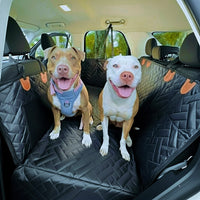
For transport during mobility transitions, many owners also like using a Whisker Bark dog seat cover with a hard bottom to help keep car rides simpler while routines shift.
Share