

Are Dog Seat Covers Safe for Leather Seats?
Yes, a dog seat cover is safe for leather seats, with one condition that matters more than the material it is made from: it has to stay still. A cover that slides traps grit and drags it across the finish on every turn, and that abrasion does more damage than an uncovered seat with a well behaved dog would.
The risk people worry about is the cover itself scratching the leather. The risk that actually shows up is what gets trapped underneath it.
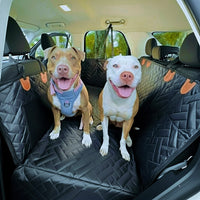
That changes what is worth looking for. On leather, a cover earns its place by staying anchored rather than by being thick or soft, which is the reasoning behind the rigid base in our hard bottom dog seat cover. Below is what actually goes wrong, and what to check before you fit anything at all.
What Actually Damages Leather in a Dog's Car
Four mechanisms, in rough order of how often they are the real culprit.
Trapped grit plus movement. Sand and road dust work their way under any cover. On a cover that stays put, they sit there harmlessly. On a cover that creeps an inch each drive, they get dragged back and forth across the same strip of finish thousands of times. This is the one that quietly dulls a seat, and it is entirely preventable.
Nail pressure at specific points. Claws rarely damage the flat of a seat. They mark the side bolsters and the seat edge, because those are where a dog steps and pivots getting in. A cover that stops at the seating surface leaves exactly the wrong part exposed.
Moisture reaching the seams. Drool and wet fur do not do much on a flat panel of finished leather. They do more where the stitch lines are, because that is where liquid sits and where it can get behind the surface. Perforated sections are the same problem for the same reason.
Dye transfer. This one catches people out. Dark harness webbing and collar nylon can transfer color onto light leather over time, particularly with heat and pressure. If you have white or cream seats and a black harness, that contact point is worth watching. It has nothing to do with the seat cover, and a cover is one of the things that prevents it.
Why a Sliding Cover Is Worse Than No Cover
Not in general, but in one specific respect that is worth being clear about.
An uncovered seat gets cleaned. You see the hair and the mud, so you deal with it. A cover that shifts hides the debris and then works it against the surface underneath, which means the abrasion accumulates somewhere you are not looking until the finish has already dulled.
This is why the useful question is not "is this cover soft" but "does this cover move." Softness does nothing to prevent abrasion, because the abrasive is the grit, not the fabric. That is the whole argument for building a cover around a rigid base instead of padding it.
Vacuum the seat before you fit anything. This single step matters more than which cover you buy. Whatever grit is on the seat when you install the cover is grit that has just been sealed in against the leather.
Heated, Ventilated, and Perforated Seats
One tradeoff worth knowing about before you order, because it applies to every cover on the market rather than any particular one.
Any cover sits between you and the seat, so a heated seat will take a little longer to feel warm through it, and a ventilated seat will move less air through the perforations. Neither causes damage and neither creates a fault. It is a comfort difference, not a risk.
For most people it never comes up, because the cover goes on the rear bench where the dog rides and the front seats stay uncovered. If you do use ventilation constantly on the seat you want covered, that is the tension to weigh, and it is worth deciding deliberately rather than discovering it in February.
Perforated seats have a separate and more practical issue, and it is about cleaning rather than covering. Never spray a liquid onto a perforated seat that still has hair and grit sitting in the holes, because you push all of it down inside where nothing will retrieve it. Blow the debris out with compressed air first, brush gently, vacuum, and only then treat the surface.
On Conditioning Leather
Most leather in modern cars is finished with a surface coating rather than left open pored, which means care products behave differently than they would on a furniture hide or a leather jacket. Whether a given product is appropriate depends on that finish, and it varies between manufacturers and between trim levels within the same brand.
So we are not going to tell you what to put on your seats or how often. Your vehicle's owner manual will name the product type its finish is designed for, and that is the authority worth following. If your seats are perforated, be particularly careful with anything applied by spray, for the same reason as above.
What we can say usefully is the part that is about dogs rather than chemistry: keep grit off the surface, keep moisture out of the seams, and stop the cover from moving. Those three things account for most of the damage a dog does to an interior.
What to Look For
If leather is the reason you are shopping, four things matter and the rest is preference.
- Does it stay put? Anchoring and a non slip underside, tested over two normal drives rather than in the driveway. Smooth leather is the hardest surface to keep a cover on.
- Does it cover the bolsters? The seat edges and the door side zone take the entry damage, and a cover that only spans the seating surface misses them.
- Is there a real barrier layer? Not for the seat's sake but for the seams, which is where moisture does its work.
- Can you reach the buckles? If restraint is awkward, it gets skipped, and a dog moving freely across a leather bench is the abrasion problem you were trying to solve.
Our own hard bottom cover answers the first two of those with a rigid base and full side and door coverage.
The doors and the console are the part most leather owners forget, and they take more of the visible damage than the seat does. That side of the problem is in our guide to protecting a car interior from a dog.
The Short Version
Covers are safe for leather. Sliding covers are not, because the damage comes from grit being dragged rather than from fabric touching finish. Vacuum before you fit anything, check for drift after two drives, expect a cover to slow a heated seat and to reduce a ventilated one, and take your leather care instructions from your owner manual rather than from a seat cover company.
Share