

Dog Seat Cover for Trucks: What Crew Cabs Need
A dog seat cover for a truck has to handle a wider bench, a higher climb in, and a firmer ride than a car cover does. That means a rigid base rather than fabric tension, metal anchor hardware instead of plastic clips, full length door protection, and waterproofing that survives job site dirt rather than just rain.
Truck back seats are the hardest case in this category. The bench is wider than an SUV's, the footwell is deeper, and dogs jump in from a higher step. Covers that work fine in a crossover sag, slide, and tear in a crew cab.
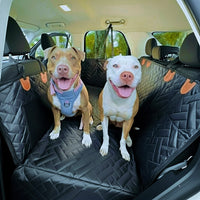
This guide covers what changes in a truck, what a cover has to handle, and how common crew cab layouts affect fit. If you already know you want a structured platform, the Whisker Bark hard bottom dog seat cover was designed around truck bench geometry rather than adapted to it.
Why Trucks Break Covers That Work Elsewhere
Four things stack up, and they compound rather than add.
The bench is wider. Crew cab benches typically run 58 to 62 inches against 52 to 58 for most SUVs. That extra span is unsupported middle, which is exactly where a tension-based cover gives way first. A 70 to 120 pound dog standing in the center of a 62 inch span is the worst case that design faces. A rigid base changes the math, because the panel carries the load into the seat cushion instead of the fabric carrying it between two headrests. Ours is rated to 400 pounds, which is the margin a wide bench actually needs.
The footwell is deeper. When a soft cover collapses into that gap, your dog is not standing on a seat any more. They are standing in a swinging pocket, and they will brace through every turn.
Entry height is greater. Dogs land with real force coming into a truck. That impact is what stretches webbing permanently, pops anchors out of the seat crease, and snaps plastic buckles. It is the single strongest argument for metal hardware in a truck, and the reason our anchors and strap fittings are metal rather than molded plastic.
The wear is harder. Job site dust, clay, gravel, snow melt, road salt, lake water. Trucks see grit that commuter cars do not, and grit is what grinds through stitching over months.
A crew cab exposes every weakness in a cheap cover. If the base is not rigid it sags, if the fabric is not reinforced it tears, and if the backing is not grippy it slides on leather.
What a Truck Cover Has to Handle
- A rigid base that spans the full bench width without dipping in the middle.
- Metal hardware and reinforced anchors that survive repeated jump-ins rather than plastic clips that snap.
- Tear resistant fabric tough enough for claws, tool bags, and gear sliding across it.
- A waterproof layer for wet coats, melted snow, and job site runoff. Our breakdown of waterproof versus water resistant construction explains why the layer underneath matters more than the fabric on top.
- Full length door protectors. Truck doors are tall, and a dog bracing on the sill during entry hits panel area a shorter door never exposes.
- Non-slip backing to keep the platform planted on leather or vinyl during braking and cornering.
- Split bench compatibility with 60/40 and 40/20/40 layouts, so you can still fold part of the bench.
- Seatbelt access that stays usable for a harness. Our guide to seatbelt access covers why this gets blocked so often.
Ours was built to that list specifically, which is why the door flaps run full length rather than stopping at the seat edge like most covers sized for cars.
Crew Cab Fit
Fit in a truck is about anchoring, not just dimensions. Five things decide whether a cover stays put.
Full width coverage. Undersized covers leave the outer edges of the bench exposed, which is where mud lands first when a dog shakes off.
Split seat compatibility. Most modern trucks use 60/40 or 40/20/40 rear benches. A cover that cannot accommodate the fold lines will bunch at every seam.
Tall headrest anchoring. Truck headrests sit higher than in a car, which gives straps more leverage. That helps if the hardware is metal and hurts if it is plastic.
Deeper cushions. A rigid base rests on top of the bench instead of flexing into the gap between cushion and floor.
Harness routing on either side. Seatbelt openings on both sides let you pick which side your dog rides.
The geometry is broadly consistent across full size crew and double cab layouts, including F-150 and F-250 benches, Silverado and Sierra crew cabs, Ram 1500 and 2500, Tundra and Tacoma double cabs, and Titan interiors. Exact fit varies by year and trim, so run yours through the fit checker or measure using our size guide before ordering.
F-150 owners can go straight to the F-150 specific guide.
Three Ways Truck Owners Actually Set This Up
The work truck. The dog rides to and from job sites on a platform instead of bare cloth or vinyl. The cover takes the gravel dust, spilled coffee, and boot mud that would otherwise soak into the bench, and the non-slip backing keeps it from walking around on rough roads. The removable insert matters here more than anywhere: you can pull the panel, wipe it, and put the fabric through a wash after a bad week instead of scrubbing a one-piece cover in the driveway.
The adventure truck. Hunting, hiking, and lake dogs ride wet. Waterproof layers and high sides keep the mess on the cover, and a rigid base keeps dogs level on rutted roads where a sling would swing.
The family truck. One side of the bench holds a child seat while the rest is the dog zone. Door flaps take both kids' shoes and dog claws. If you are running this layout, check that your cover allows child seat access safely, because a hammock wall commonly sits right over the LATCH anchors.
Why Soft Covers Fail in Trucks Specifically
If you have already tried a cheap hammock in a crew cab, this list will read as familiar.
- Sagging into the footwell. Deeper rear floors mean a soft cover has further to drop before it finds resistance.
- Broken straps. Jump-ins and hard stops stretch weak webbing until plastic clips give out.
- Torn fabric. Thin polyester does not survive big claws, tool bags, or gun cases sliding across it.
- Exposed edges. The cover rides up, and mud lands on the outer bench where it is not protected.
- Sliding on leather. Smooth truck seats let a loose cover skate, which makes footing worse rather than better.
Our guide to why a hard bottom cover matters covers the mechanics of why tension structures give way, and the back seat extender guide goes deeper on bridging the footwell gap.
For how the main brands compare, see the hard bottom cover comparison.
Getting the Install Right
Tall headrests and deep cushions make the order matter more in a truck than anywhere else. Secure the top straps around the headrests first, then push the seat anchors deep into the crease, then confirm the base lies flat across the full bench rather than bridging unevenly. Step by step is on the install page, and keeping grit out of the seams does more for a work truck cover than anything else, which our cleaning guide covers.
The Restraint Problem Is Worse in a Truck
A cover protects your bench and improves footing. It does not restrain your dog, and three things about trucks widen that gap rather than narrow it.
Stopping distance. A loaded half-ton takes noticeably longer to stop than a sedan, which means harder braking more often, which means more forward force on an unrestrained dog.
Ride height. Your dog is sitting higher off the ground than in any other vehicle you are likely to own.
What else is in the cab. Work trucks carry tool bags, coolers, and gear on the same bench or the floor behind the seats. In a hard stop those move too, and a dog with no restraint is moving through the same space they are.
Trucks are also the one body style where restraint is sometimes a legal duty rather than only a safety choice, because six states regulate how a dog may ride in an open pickup bed. Our reference on dog car laws by state names those six and sets out what each of them requires.
Which is the argument for clipping a harness through the seatbelt openings every trip rather than only on long drives. Our guide to stability versus restraint covers which product solves which problem, and where the independent crash-test data actually lives.
Share