

How to Protect Your Car Interior from a Dog
Protecting a car interior from a dog comes down to three things: a seat layer that stays put instead of sliding, coverage on the door panels where paws actually land, and a routine for wet and muddy paws before the dog gets in. Most setups fail on the first one, which quietly undoes the other two.
Almost everyone buys coverage first and stability second. That is backwards. A cover that shifts opens gaps at exactly the edges it was meant to protect, and a dog on a moving surface braces harder against the doors and console, which is where the expensive damage happens.
So before buying anything, it is worth finding out which problem you actually have.
Three Tests That Tell You What to Fix
Each of these takes a minute of attention. Together they tell you whether you need better anchoring, a real barrier, or more coverage, and those are three different purchases.
The stays-centered test. Line the edge of your current cover up against a seat seam or a buckle line and take a photo on your phone. Drive normally for two trips, then look again. If the edge has moved more than about an inch, anchoring is your problem. Buying more coverage will not help, because whatever you buy will drift the same way.
The hammock test. Lay something straight across the bench, a yardstick or a level or any flat board, and look at the gap under the middle while your dog is sitting on it. A dip of an inch or more means the surface is carrying weight through fabric tension rather than through a structure, which is the difference our guide to why a hard bottom matters goes into. In practice you will see bracing, bunching, and water pooling in the low spot on wet days.
The moisture transfer test. After a wet ride, slide a dry paper towel underneath the cover in the wettest area and leave it ten minutes. If it comes out damp, moisture is reaching your upholstery, and the fix is a genuine barrier layer and faster drying rather than thicker padding. Padding holds water against the seat.
Take the photo. Drift is almost impossible to judge from memory, because it happens in increments too small to notice and you re-tension without registering that you did. A photo makes an inch obvious.
Which Mess Problem You Actually Have
Three patterns cover most dogs, and they need different priorities. Plenty of dogs are two of them.
| Pattern | Where it ends up | What to prioritize |
|---|---|---|
| Heavy shedder | Seat seams, carpet edges, vents, and eventually the headliner | Full bench coverage that closes the edges, so hair lands somewhere you can shake out |
| Muddy dog | Footwells, seat creases, door panels, cargo trim | A stable base that blocks the footwell drop, plus a paw routine before loading |
| Swimming dog | Stitching lines, floor mats, door pockets, and a smell that returns | A real waterproof barrier and door coverage for shake-off spray |
If you landed on heavy shedder and the hair is already through the car, containment is the second job. The first is getting out what is in there now, which our guide to removing dog hair from a car covers in detail.
The distinction that matters is between gear that is decorative and gear that is protective. Protective means it solves at least two of movement, moisture, and abrasion. A soft quilted cover that slides solves none of them and feels like it solves all three, which is why people replace one with another for years.
The Half Nobody Protects: Doors and Consoles
Seat covers are where the attention goes. Door panels and center consoles are where a surprising share of the visible damage actually accumulates, and almost nothing sold for dogs addresses them.
Five things cause it, and none of them are bad behavior.
- Bracing during turns. A dog pushes outward to stabilize when the vehicle shifts. The door is the nearest solid object.
- Window viewing. Standing with paws on the armrest puts a dog's weight through a few nail tips in one small area, repeatedly.
- Entry and exit. A tall vehicle turns getting in into a jump, and jump force lands on doors, bolsters, and the console edge.
- Wet paws and grit. Sand and dust dragged across a soft-touch panel behave like sandpaper on a surface that was never meant to take abrasion.
- Console leaning. Many dogs treat the center console as an armrest, particularly in wide-trim trucks.
Modern vehicles make all five worse. Doors are larger, so there is more surface for a paw to land on and drag across. Interior trims moved to coated and soft-touch finishes that mark more readily than the hard plastics they replaced. Consoles got wider and higher. Ride height went up, which increases entry force. The same dog that left barely a mark in a fifteen-year-old sedan can leave visible scuffs in a current SUV.
The console gets targeted for three specific reasons: it is the highest handrail in the cabin, it sits close to the dog's center of mass, and it happens to be exactly where a dog braces during braking.
Why the fix is at the seat, not the door
Here is the part that is counterintuitive enough to be worth stating plainly. The most effective thing you can do for your door panels is usually to stop the seat surface from moving.
When the riding surface shifts, a dog compensates by leaning harder and bracing wider, and the bracing lands on doors and consoles. When the surface stays flat and still, dogs settle sooner and stop needing to catch themselves with their paws. Door coverage handles the contact that still happens. Stability reduces how much contact happens in the first place.
What people try, and how each fails
Towels and blankets. Free, and they slide and bunch within a drive, usually exposing the armrest area that was the reason for hanging them.
Suction-cup mats. Look tidy on day one. Suction releases with temperature swings and does not hold reliably on textured trim, which is most modern door panels.
Clip-on panels. Better than towels, but they are a separate system from the seat cover, so they drift out of position whenever the dog pivots or braces against them.
Flaps that are part of the same anchored system as the seat layer avoid this, because they move with the coverage instead of fighting it, and they leave no adhesive residue or peel-and-restick cycle.
Wet Dogs: What to Do Before the Door Opens
Most interior damage from a wet dog is decided in the ninety seconds before loading, not during the drive.
- Make a shake-off zone. Pause a few steps away from the car and let the shake happen outside. A shake inside the door coats the panels, the window, and the seat back in one motion.
- Get the towels out first. Two of them, one for the coat and one for paws. Reaching for a towel with a wet dog already on the seat is how the seat gets wet.
- Rear paws first. They carry the most mud and water into the seating area, and they are the ones people forget.
- Then belly, chest, and legs. The underside holds more water than the back does and it is the part that makes contact with the surface.
- Load calmly. A rushed entry is a scrambling entry, and scrambling is what marks door panels.
One more that costs nothing: a dedicated wet-dog towel laid on top of the cover for the ride home, removed and hung up afterwards. It keeps moisture from sitting in seams for hours, which is what turns a wet trip into a smell.
What Wears Out First, and in What Order
Covers rarely fail dramatically. They fail as slow changes in geometry, and each stage makes the next one arrive faster.
- Strap creep. Webbing settles at the buckle in increments too small to see. The surface stops staying centered.
- Center pocket. The span starts to dip, and the dip pulls the dog inward, which deepens it.
- Edge drop. The front edge droops toward the footwell and the dog starts bracing on every stop.
- Seam seep. Moisture finds the stitch lines, which is the path of least resistance, and lingers there.
- Grit embedding. Textured fabric traps debris, each cleanup gets harder, and the trapped grit accelerates everything above it.
Replacement is the honest answer when the straps will not stay tight, when the surface stays deformed after the dog gets out, or when the setup will not stay centered even after you have added grip underneath and re-tensioned properly. Those three mean the structure is gone, and no amount of routine brings it back.
Five Fixes That Cost Nothing
Worth doing before buying anything, and worth doing regardless of what you buy.
- Put something grippy underneath. A thin non-slip liner between a smooth leather or vinyl seat and the cover solves a surprising share of drift problems on its own.
- Re-tension after the first two trips, then leave it alone. That is when creep happens. Constant fiddling afterwards is a sign the anchoring is wrong, not a maintenance routine.
- Keep two towels in the car permanently. A protocol you have to go and fetch is a protocol you skip.
- Rinse and dry after beach or mud days. Grit that stays in the fabric grinds into the stitching every time the dog moves.
- Protect the doors before there are marks, not after. Paw contact in the same spot becomes a habit quickly, and the first scuffs are the ones that set where the habit lives.
What We Look At When Someone Writes In
Most of the setup problems people ask us about come down to four things, and we work through them in this order.
Bench span and footwell depth. Wide benches and deep drops magnify hammock behavior. The same cover behaves differently in two vehicles parked side by side, which is why we built a fit tester rather than publishing a compatibility list.
Headrest geometry and strap angle. The direction the straps pull matters more than how hard they are pulled. Straps that pull downward load the fabric in the same direction as the sag.
Buckle access. If reaching the seatbelt is awkward, the harness gets skipped on short drives, and short drives are most drives. This one gets dismissed as a convenience issue and it is not.
Seat material. Slick leather usually needs something grippy underneath regardless of what the cover claims about its backing.
The pattern we see most often is the wet dog after a beach or lake trip, and the first failure is almost never a tear. It is moisture plus grit: water sits long enough to work into the stitched zones, sand grinds into the seams, and the cover starts shifting more as the surface gets heavier and slicker. The fixes that resolve it are a towel on top for the ride home, a shake-out before the cover goes back down, something grippy underneath, and drying it properly rather than folding it away damp.
Mistakes That Keep the Car Dirty Anyway
- Choosing a fabric that holds hair and stays damp instead of one that releases and dries.
- Covering grit rather than removing it, so it grinds underneath where you cannot see it.
- Letting a wet dog settle before the paws and belly have been wiped.
- Leaving the bolsters exposed, which is where dogs step and pivot on the way in.
- Treating softness as the strategy. Softness does not prevent shifting, and shifting is what causes wear.
- Waiting long enough between cleanings that grit has embedded, at which point every subsequent clean is harder.
Putting It Together
The setup that holds up over years is not complicated. A seat layer that stays centered and does not hammock. Door coverage where paws land. A waterproof barrier if your paper towel came back damp. Seatbelt access you can reach without thinking. And a small kit kept in the car, towels and wipes and a bag for muddy things, so the routine survives a day when you are in a hurry.
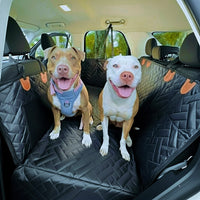
Our own answer to the first two is a hard bottom seat cover with integrated door flaps, built so the side coverage is anchored to the same system as the seat surface rather than clipped on separately.
The Short Version
Run the three tests before you buy anything, because they tell you whether you need anchoring, a barrier, or coverage. Fix movement first, since a surface that stays still protects the doors as much as it protects the seat. Handle wet paws outside the car. And re-tension after the first two trips, then stop touching it.
Share